Best Trees for Climate Change

Trees Suitable for Climate Change

Native Trees

Some of the United Kingdom’s most valued trees are struggling to keep pace with climate change and increasing extreme weather.”

Weather patterns are changing, and Britain experiences frequent hotter, drier summers. Some of Britain’s native trees find the changing weather conditions challenging, and they are not growing to their full potential.

It is becoming clearer to many experts that planting just native trees is no longer sustainable. Worldwide weather patterns seem to be changing, and it is time to look beyond planting purely native species, and focus on including trees that accept warmer and drier conditions and are less prone to tree pest and disease issues.

The Best Trees for Climate Change

There is, perhaps surprisingly, a good choice when considering which are the best trees for climate change. Our Managing Director, Alastair Beddall, makes his recommendations and suggests that planting design should include:

  • Both native and non-native species
  • Species that tolerate high UV levels, sustained heat, urban stress and drought
  • Shade trees to give cover and protection from sun for animals, humans and shade loving understorey
  • A broad mix of species to avoid losing all planting should some species fail

Alastair’s recommended resilient trees to plant

The following trees are all in stock at our Buckinghamshire nursery. We can quote plant your chosen trees. Contact our Horticultural team trees@pracbrown.co.uk for details.

Deciduous Trees

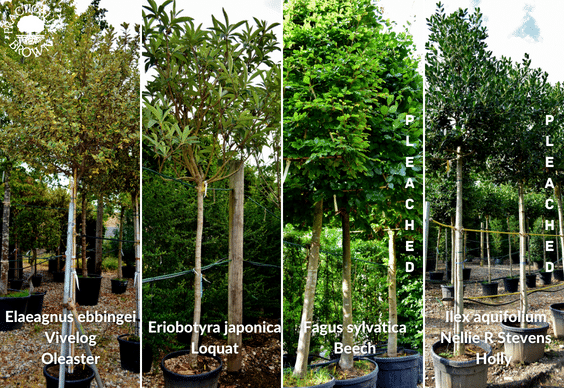
Beech (Fagus sylvatica)

Our native beautiful Common Beech. It can grow very large when planted as a single specimen tree. Fresh green leaves on foliation which become a stunning orange-copper in autumn. Its leaves do not fall in autumn, often staying attached until spring. Mature height 40m


Downy Birch (Betula pubescens)

Also known as Betula pubescens, this tall deciduous has shoots that are greyish red purple, covered in short, soft, pale hairs. Its light green leaves become orange-yellow in the autumn. This hardy tree prefers damper environments, and tolerates shady conditions. Mature height 20m


Hornbeam (Carpinus betulus)

Carpinus betulus (Common Hornbeam) is a native tree. It has bright green leaves which turn a shining yellow through to brown in the autumn. Hornbeam tolerates a wide range of conditions; sun and shade, cool to hot, as well as windy sites. It is happy in both dry and wet soils as well as either chalk or clay. Mature height 20m


English oak – Quercus robur

Our native English Oak (also known as pedunculate oak) is a large majestic tree that can be found across the length and breadth of the UK. The golden-brown autumn foliage is accompanied by acorns. This tree is excellent for supporting a wide variety of wildlife. A very hardy specimen, frost and wind resistant and tolerant of different soils. Mature height 30 metres


Red Oak – Quercus rubra

Quercus rubra or red oak has large leaves that are dark green and turn a glorious red-orange in autumn. Another hardy oak, Quercus rubra can tolerate dry soil, drought and air pollution, it thrives best on fertile well drained soils. Mature height 20+ metres

Please note: all Quercus are subject to special movement conditions due to oak processionary moth


Rowan – Sorbus aucuparia ‘Sheerwater Seedling’

Sorbus aucuparia is a Mountain Ash that is equally at home in urban environments. The creamy white flowers hang in clusters in the spring and are followed by bright red, bird friendly, red-orange berries in autumn, just as the leaves turn yellow and gold. This wildlife friendly tree will tolerate a wide range of soil conditions and does not mind being planted in semi-shade and is useful where space is limited, providing year-round interest. Mature height 12 metres


Common European Lime Tilia europaea

An impressive parkland tree, and seemingly resistant to most of the tree diseases, these fast-growing trees have an elegant, tidy shape. Its fragrant yellow flowers that hang in cymes, whilst it’s lush green leaves turn a vivid yellow just before they fall in autumn. This is a tough tree, thriving on most soils, and is frost hardy. It is good for urban areas and is wind resistant. Mature height 20+ metres

Other recommended limes include the following. We do not currently hold stock of these, but ask us for a quote:

• For avenues look at Small leafed Lime (Tilia cordata)

• For wider avenues or parkland European Lime (Tilia europea Pallida), or Broad leafed Lime (Tilia platyphyllos).

A favourite Lime is the Silver Lime (Tilia tomentosa) with its silvery underleaf which twinkles in the wind. Its large pyramidal broad crown provides livestock with shelter and has good yellow autumn colour. Not usually affected by aphids so little honey dew drop.


Silver birch – Betula pendula

Betula pendula or Silver Birch, is beloved for its elegant appearance. Its main branches are long and often grow horizontally, creating a semi weeping habit.  The Pendula produces light green foliage that shoots early, becoming orange-yellow in the autumn. This is a hardy tree which is frost resistant and regularly the first to grow back on bare or damaged land. Mature height 20 metres


Sweetgum – Liquidambar styraciflua

Liquidambar styraciflua or American Sweet Gum is a large, undemanding tree, which is known for its beautiful greeny-red leaves and fabulous autumn colour. It is pollution resistant, grows well on acid soil, tolerates poor drainage but less so drought. Slow growing, it will eventually reach up to 20m tall, but taking around 50 years to achieve this.


Evergreen Trees

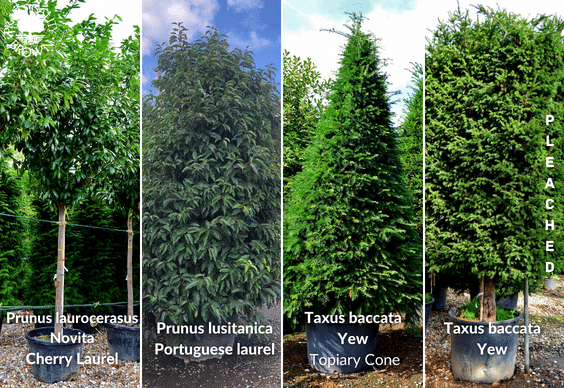
Portuguese Laurel – Prunus lusitanica

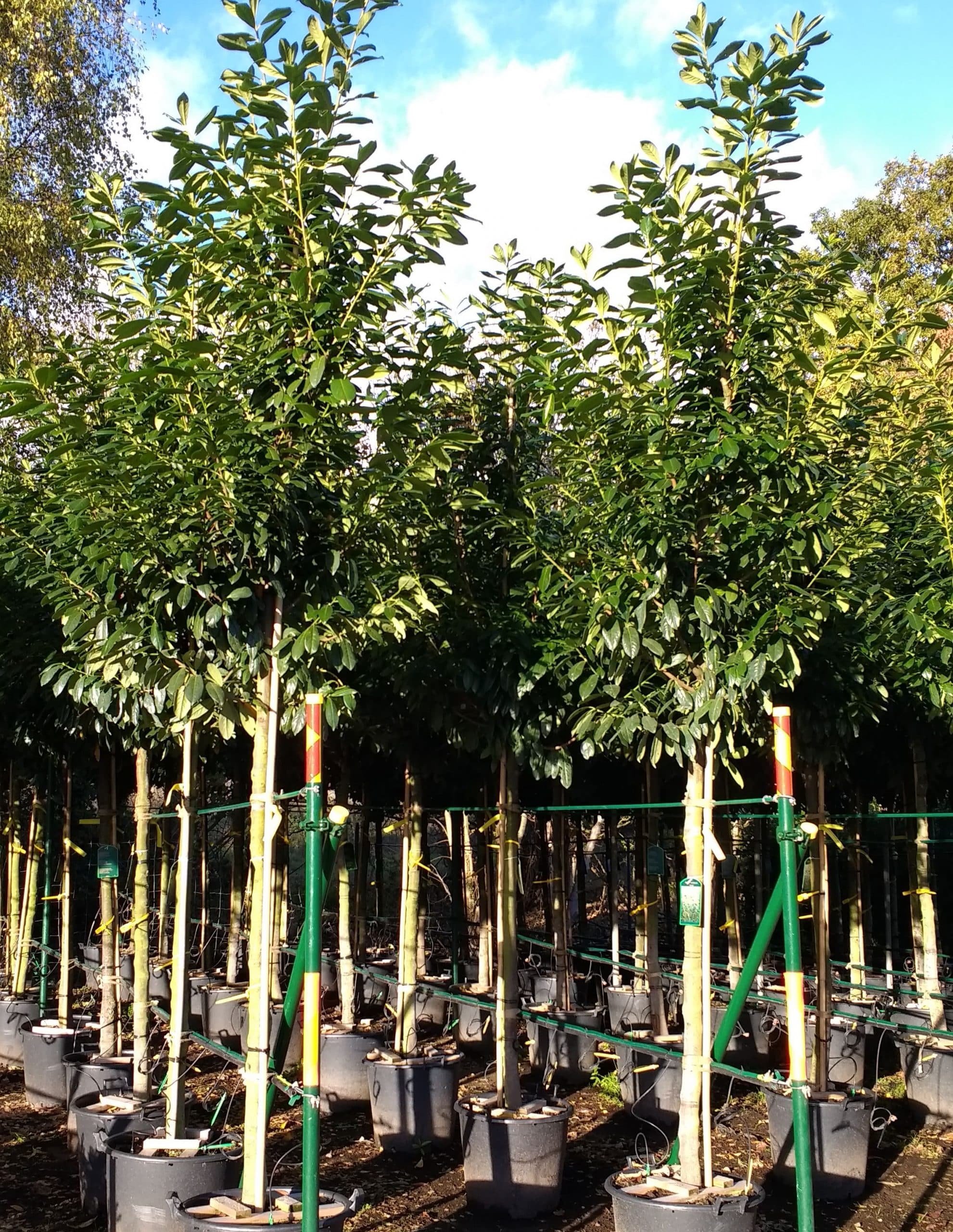
Prunus lusitanica, or Portuguese laurel is a small, hardy evergreen tree of spreading habit. The foliage is dark green and glossy and striking against new red shoots. Very hardy, tolerates heat and drought, and can handle sun or shade in most soils including shallow chalk. Prunus lusitanica can be planted in either sun or shade, but it dislikes wet ground. Mature height 4-6 metres


Strawberry Tree – Arbutus unedo

Arbutus unedo is an attractive tree with young shoots that are tinged red before hardening to dark green. The small white, bell shaped flowers appear in small clusters and are produced together with the strawberry-like red fruit in the autumn, providing a contrasting display. A resilient mediterranean native that resist heat, drought and even pollution and fires. The tough evergreen leaves help to make this tree a good choice for exposed, coastal sites. Prefers a moist, well-drained soil. Mature height up to 8 metres


Magnolia-  Magnolia grandiflora gallioniensis

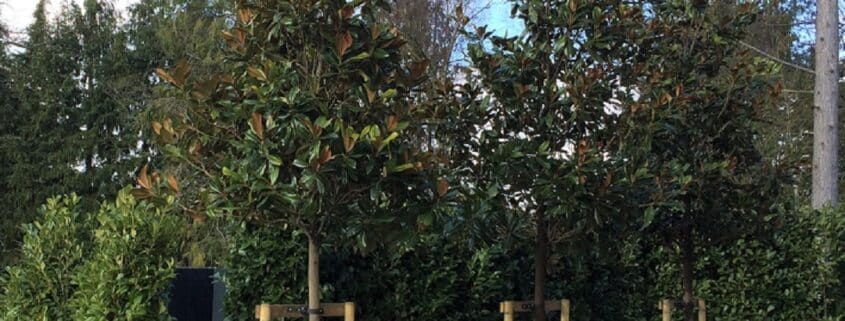
Magnolia grandiflora ‘Gallisoniensis’ produces beautiful, large, sweet smelling white flowers in the summer, which can be up to 25 cm in diameter. At maturity this tree becomes broad and round headed with a bushy habit. Resilient to diseases, heat and drought, it thrives in full sun although prefers sheltered spot away from cold drying winter winds and frost. Mature Height 15 metres


Loquat Tree  – Eriobotrya japonica

Large exotic looking tree with attractive leaves and eye-catching yellow and orange fruit. Although it has proved to be reliably hardy in the UK, frost pockets are best avoided. It requires well drained soil and tolerates heat and drought well. It needs sun to look its best. Mature Height 8 metres


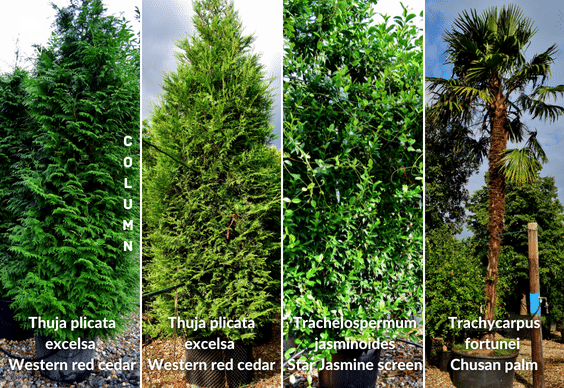
Western Red Cedar – Thuja plicata

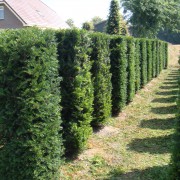
Thuja plicata is a fast-growing large evergreen tree with horizontal branches forming a loose, columnar habit, reaching an ultimate height of up to 35m. A popular alternative to Leylandii, as it is slower growing but is still a dense evergreen conifer. Thuja can be hard pruned, unlike Leylandii. A hardy tree with dense foliage, this tree is ideal for screening. Grows well in most conditions, prefers cultivated soil.

More Weather Tolerant Trees

The above list is not exhaustive, and we do have further recommendations of trees that may be resilient to climate change. The following trees are not held in stock at our Buckinghamshire nursery, but we can source and quote to supply and plant them (should you require the latter) Please contact our Horticultural team trees@pracbrown.co.uk


Deciduous Trees:

Foxglove Tree – Paulownia tomentosa

Honey Locust – Gleditisia triacanthos

Judas Tree – Cercis siliquastrum

Black Birch – Betula nigra

Black Walnut – Juglans nigra

Broad leafed Lime – Tilia platyphyllos

Dawn Redwood – Metasequoia  glyptostroboides

European Lime – Tilia europea Pallida

Indian Horse Chestnut – Aesculus indica

Pin Oak – Quercus palustris

Scarlet oak – Quercus coccinea

Sycamore – Acer Pseudplatanus

Tulip Tree – Liriodendron tulipifera


 Evergreen Trees:

Coast Redwood – Sequoia sempervirens

Wellingtonia or Giant Sequoia – Sequoiadendron giganteum

Contact us if you would like to discuss your garden or landscape project, our Horticultural Team would be delighted to help.


Further reading and information can be found at:

RHS Trees for Climate Change

RFS Planting for resilient woods

BBC Rising temperatures threaten UK trees

Forestry England Tree species for the future


Line of pleached trees French Laurustinus
Evergreen Pleached Trees – Viburnum tinus ‘Lucidum’

Pleached Viburnum tinus ‘Lucidum’: Evergreen Screening with Style

Pleached trees are an ideal solution if you’re looking for privacy and structure into your garden. Among the most versatile choices is Viburnum tinus ‘Lucidum’ – an elegant, evergreen variety, also known as French Laurustinus.

This tree is admired for its glossy dark green foliage, which stays dense throughout the year, ensuring reliable evergreen screening. Unlike many evergreens, it offers seasonal interest. Small fragrant creamy-white flowers are borne in flattened flowerheads, up to 10cm in diameter, from late winter into spring and are followed by attractive blue-black berries in autumn. This is a wildlife friendly evergreen.

 French Laurustinus pleached form

Pleached Viburnum tinus ‘Lucidum’

Pleached Viburnum tinus ‘Lucidum’ create narrow screens of foliage above a clear stem. This makes it especially useful in modern gardens where space is at a premium. You can achieve privacy without the bulk of hedging, while still allowing light and space beneath the canopy.

Where pleached Viburnum trees work best:

  • Along boundaries, to soften fencing and create a “living wall” of evergreen foliage.
  • Around patios or terraces, for stylish screening from neighbours.
  • Beside driveways or garden paths, adding structure without crowding ground-level planting.
  • In contemporary garden designs, bringing both formality and year-round interest.
  • As an avenue of trees along a driveway or property entrance, for an elegant approach.

Easy to maintain and responsive to pruning, Viburnum tinus ‘Lucidum’ is as practical as it is attractive. With its evergreen cover, seasonal flowers and berries, and refined pleached form, it’s a fantastic investment for any garden. These trees provide instant structure, elegance, and privacy, making them the perfect choice for transforming your outdoor space.

Available in stock now

Pleached Viburnum tinus ‘Lucidum’ trees ready for planting now 3-3.5m high on 1.5m x 1.2m frame

Special Offer £770 each

We have a good quantity of these stunning, mature specimens in stock at our Buckinghamshire nursery, and the Pleached Viburnum tinus ‘Lucidum’ trees are available at just £770 each (plus vat and delivery) — no other discounts are available on this special price. We are making way for new arrivals.

With our Plant Healthy certification, you can be sure that all our plants meet rigorous biosecurity standards.

Contact us today to arrange a visit, and to talk about our team about planting for you and project management.

Best Pleached Trees

Our Top Evergreen Pleached Trees

If your garden needs effective screening or simply to improve privacy without reducing the living space then a pleached tree may well be the answer. We have the following evergreen pleached trees in stock at our nursery in Iver, Bucks:

Contact us for details

Please email trees@pracbrown.co.uk or call 01753 652022 for more information

Stock

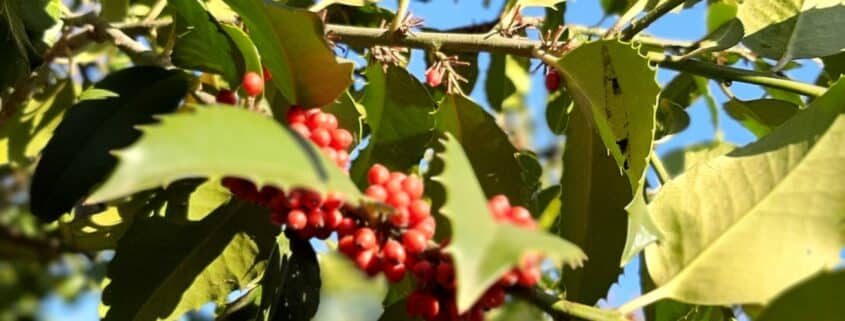
Ilex aquifolium ‘Nellie R Stevens’ (Holly)

Ideal for screening due to its symmetrical habit, density and lack of pruning requirements. The glossy green leaves are smooth rather than spikey. The autumn berries provide colour and food for birds. Grows well in well-drained soil, is drought tolerant, needs partial sun.


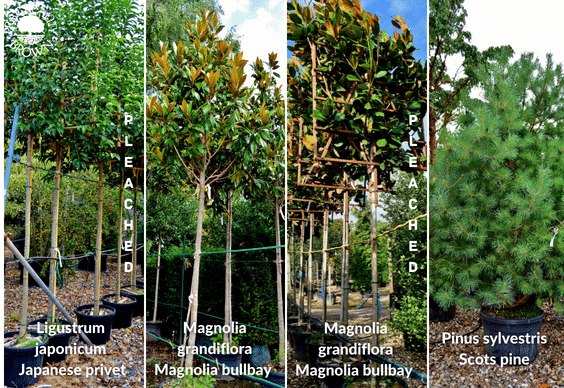
Magnolia grandiflora ‘Gallisoniensis’

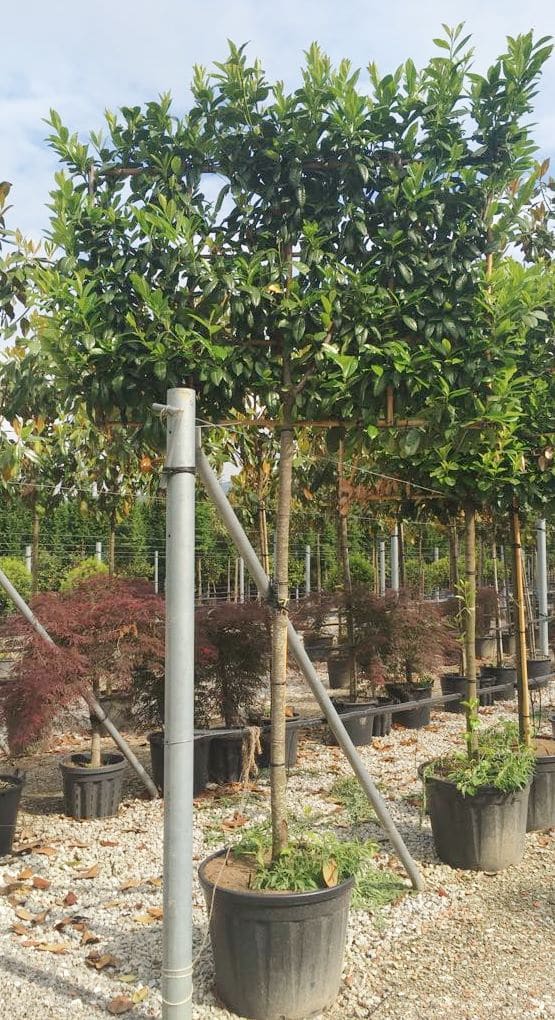
With large dark green leaves, this evergreen produces beautiful, large, white flowers in the summer, which can be up to 25 cm in diameter. As well as decorating this stunning tree, they also create a sweet-citrus smelling aroma, and makes a stunning pleached tree. Magnolia grows well in most soils, but it must be sheltered and not north-facing.


Photinia x fraseri ‘Red Robin’

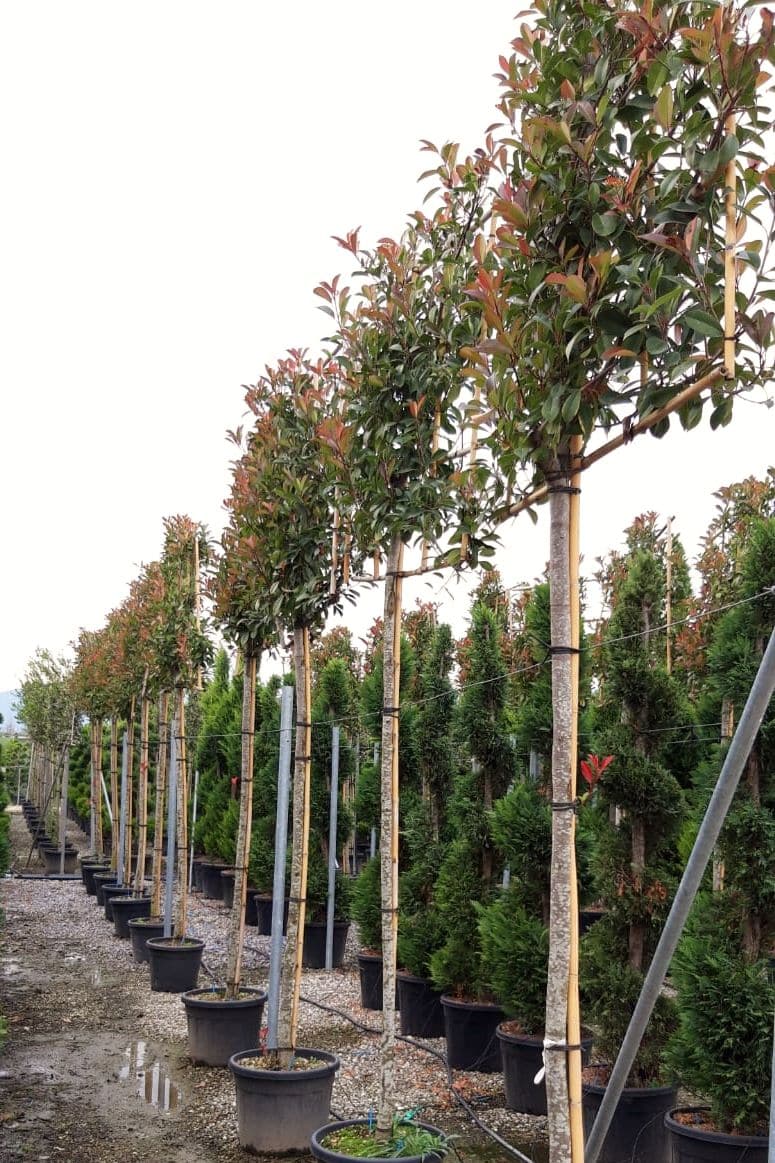
This is a versatile evergreen, that has vibrant red new shoots in spring, which contrast with the white blossom – unusual in an evergreen.  The bright new leaves change to a deep, glossy green as they mature. This tree is a colourful pleached tree.


Prunus laurocerasus ‘Novita’ (Cherry Laurel)

This is a popular tree, with an upright and bushy habit which is perfect year-round screening in its pleached form.  Its large leaves are elliptical, shiny and bright green and have small, sweet-smelling, white flowers, which grow in vertical racemes, followed by small, cherry-like fruit.


Ligustrum japonicum (Japanese Privet)

A compact, small sized evergreen tree with camellia-like olive-green leaves that looks attractive in pleached form. It bears large clusters of white flowers in late summer. A tough performing species that will thrive on most soils, but avoid waterlogged areas


What is a pleached tree?

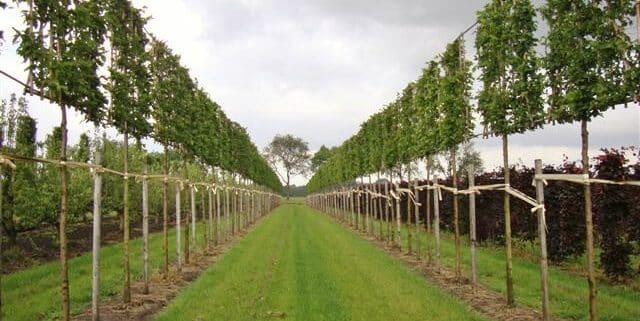
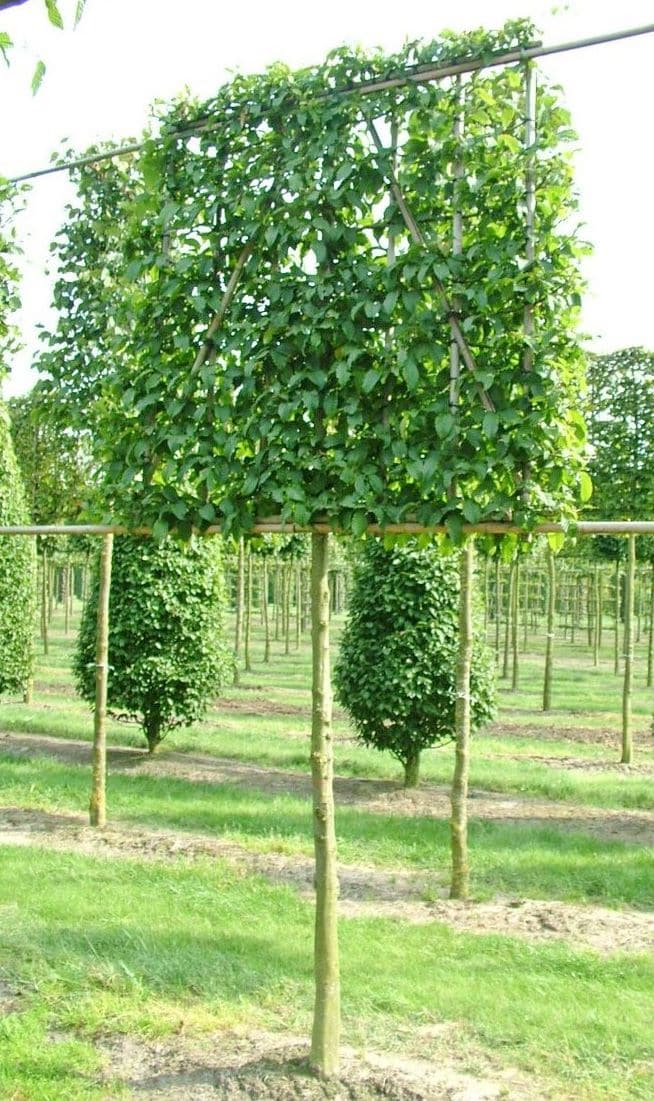
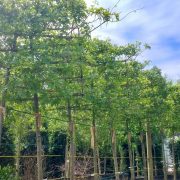
Pleached trees can create effective screening or simply to improve privacy in your garden, without taking up very much space due to their slim canopy.  Pleached trees are created by training trees to a square frame, tying in and interlacing flexible young shoots along a supporting framework, creating an attractive slender tree. The frames vary in size and can be wooden, bamboo or metal. The clear stem of the tree is usually 1.8/2m high but can vary. The frame is usually 1.2m wide and 1m high but we do have various sizes in stock.

Contact to us about your requirements for screening or privacy in your garden; we can supply and plant many types of attractive trees .


Ilex aquifolium 'Nellie R Stevens' - Holly 'Nellie R Stevens' An evergreen holly with smooth rather than spikey leaves and bright red autumn berries
Our Top 23 Trees That Are Looking Good Now

Our Best Looking Trees

We select the best quality specimen and semi mature trees and then carefully nurture these at our Tree Nursery in Iver, Buckinghamshire. This means that you will have the best trees for your garden project.

Looking Good Now

The specific trees listed below are looking particularly fine at the moment, and are ready for planting now.

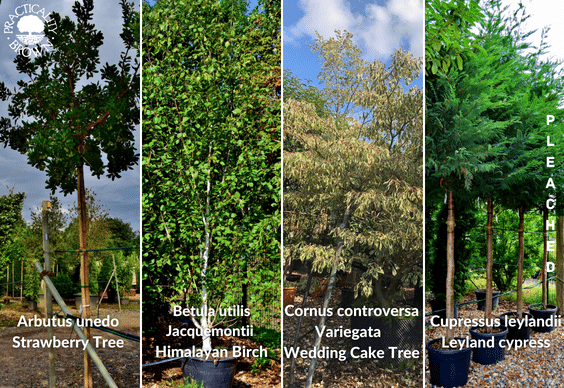
Arbutus unedo – Strawberry Tree
An attractive evergreen tree offering year-round interest with its flowers, fruit, leaves and bark.
Standard specimen, girth 10-12cm and currently 3m high Price £282

Betula utilis ‘Jacquemontii’ – West Himalayan Birch
An elegant deciduous birch tree with bright white bark that peels each year and dark green foliage that turn golden yellow in autumn. Multi-stemmed specimen is 5-5.5m height with a spread of 4m Price £278

Cornus controversa ‘Variegata’- Wedding Cake Tree
These deciduous trees grow in distinct layers with each new year of growth, and the creamy flowers hang in clusters from the tree. Standard tree 3.5-4m high Price  £1395

Cupressus leylandii – Leyland Cypress pleached
These pleached Leylandii are an effective evergreen screening choice for smaller spaces, but it must be regularly maintained and clipped to ensure they are contained for shape and space
Pleached tree 2.1m clear steam and 3-3.5m high Price £838

Elaeagnus ebbingei Vivelog – Oleaster
Highly regarded for its sweet fragrance and tiny bell-shaped white flowers in late summer, this evergreen tree also has small orange berries in the winter and variegated foliage
Standard tree is 3m high with 1.8m clear stem Price £414

Eriobotyra japonica – Loquat
This evergreen tree has a beautiful scent and produces white flowers that last from winter through to spring
Standard tree 1.9m clear stem and 18-20cm girth 3m high Price £838
Half standard with 1m clear stem and 18-20cm girth 2.5-3m high Price £469

Fagus sylvatica – Beech pleached
A popular native deciduous tree that retains its leaves throughout the winter months. The leaves are fresh green in the spring, turning golden in the autumn
Pleached trees have 1.6m clear stem, girth 30-32cm and height is 3-3.5m   Price £850

Ilex aquifolium ‘Nellie R Stevens’ – Holly ‘Nellie R Stevens’
An evergreen holly with smooth rather than spikey leaves and bright red autumn berries. We have these trees in both pleached and standard formats
Pleached 12-14cm girth 3.5m height Price £927
Standard 12-14 girth 3.5-4m height Price £476
Standard 14-16 girth 3.5-4m height Price £523

Ligustrum japonicum – Japanese Privet pleached
A compact, small evergreen tree with shining olive-green leaves and large panicles of white flowers in late summer.
This tree is available in various sizes:
Pleached 8-10cm girth Price £302
Pleached 10-12cm girth Price £662
Pleached 16-18cm girth Price £877
Standard 20-25 girth Price £670

Magnolia grandiflora Gallisoniensis- Magnolia Bullbay pleached
An evergreen with extravagant, fragrant white flowers. We have this stunning tree as pleached and clear stem standards.
Pleached tree 10-12cm girth Price £503
Pleached tree 14-16cm girth Price £938
Pleached tree 16-18cm girth Price £1139
Standard tree 14-16cm girth Price £772
Standard tree 20-25cm girth Price £1425

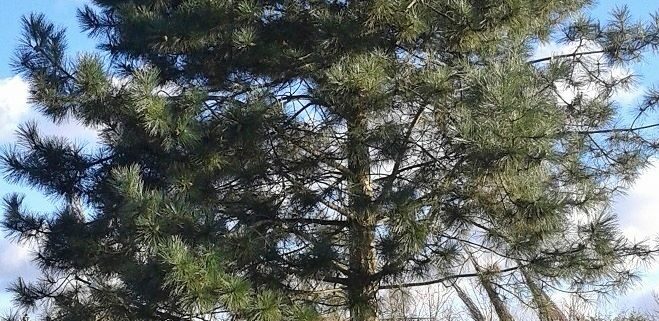
Pinus sylvestris – Scots Pine
A large native, long-lived evergreen tree with blue-green needles (when young) and attractive craggy bark.
Feathered tree 2-2.5m high and 2-2.5m spread Price £251

Prunus laurocerasus ‘Novita’ – Cherry Laurel
A popular evergreen screening tree with large shiny leaves.
Standard tree 14-16cm girth Price £497
Standard tree 16-18cm girth Price £596
Standard tree 18-20cm girth Price £729
Standard tree 20-25cm girth Price £828

Prunus lusitanica – Portuguese laurel
An attractive evergreen with slender leaves. It can produce small, white, sweet-smelling blossom.
Feathered 2.5-3m high Price £251

Taxus baccata – Yew
A native British evergreen conifer that is a fine specimen, it will need trimming to maintain its shape and desired size. We have two special specimens
Pleached 0.6m clear stem 0.7m wide 3.5m+ high Price £546
Cone Topiary Price £550

Thuja plicata ‘Excelsa’ – Western Red Cedar
A slender, fast growing evergreen tree with a conical shape. It can be left natural or pruned to create evergreen screening. We have these trees available as a column or in feathered formats
Column 3m+ Price £177
Feathered height 5-5.5m Price £451

Trachelospermum jasminoides – Star Jasmine on metal screen
An attractive self-twining evergreen climbing shrub with clusters of fragrant white star-shaped flowers in spring, early summer. Two screens of each height
1m wide by 1.5m high Price £268
1m wide by 2.2m high Price £603

Trachycarpus fortunei – Chusan palm
Hardy tropical evergreen palm with large fan-shaped leaves, Ideal for bringing an exotic flair to your garden.
Large specimen is over 6m high Price £850

Special Offer

A 20% discount will be applied to ex VAT orders of trees worth a total of £3000 or more.
The discount applies to the tree stock value of the order only, not to delivery and planting etc.

Contact us for details

Please email trees@pracbrown.co.uk or call 01753 652022 for more information.
Prices Held on Evergreen Trees despite weakening £

Prices Held on Summer Stock

We have a range of evergreen trees that are currently in stock at our nursery in Iver and are available at summer prices. There are no price increases on these in-stock trees, as they are not subject to exchange rate fluctuations*.

Same too for our Practical Instant Hedge™ range, which is grown on site by our experienced Horticultural team.

Evergreen Trees

The current range of evergreen trees here at our Iver nursery includes various sizes of:

  • Holly (Ilex Nellie R. Stevens)
  • Chestnut Leaved Holly (Ilex Castaneifolia)
  • Japanese Privet (Ligustrum japonicum)
  • Magnolia Grandiflora ‘Gallisoniensis’
  • Osmanthus aquifolium
  • Osmanthus armatus
  • Loquat (Eriobotrya japonica)
  • Photinia fraseri Red Robin
  • Prunus laurocerasus Novita (Cherry Laurel)

Practical Instant Hedge

We have over ten thousand metres of Practical Instant Hedge™ in production, and will always have  something available for you to consider. The range is available in heights from 60cm to 2m, and the current stock includes:

Evergreen

Griselinia, Yew, Elaeagnus, Portuguese Laurel, Common Laurel, Privet, Photinia ‘Red Robin Holly and White Cedar

Deciduous

Native Mix,’, Hawthorn, Green Beech, Purple Beech, Hornbeam

Semi Mature Trees

We specialise in semi mature trees for sale, and select the best quality specimen and semi mature trees each season so that our customers have the best possible trees available.

Over the years, we have developed close relationships with several specialist growers and nurseries, meaning that we can offer quality and quantity for all sizes of projects.  We continually monitor conditions to ensure that trees are in the peak condition for planting.

Complete Service

We can supply, deliver and plant these trees and hedges for you.

Contact us

For more details, including a quote, please email trees@pracbrown.co.uk or call 01753 652022 for more information

* Some imported stock from Europe has seen prices increases of 15-20% – this does not apply to our products currently in stock at our Iver nursery.

Large trees newly planted in a garden
After The Storm Trees

After the Storm!

If your garden is looking a little worse for wear after the recent storms, we may be able to help!

We have a range of mature specimen trees that may be a perfect replacement for any of yours that have been damaged or blown over. Also, if your fence panels have taken a battering, you could consider replacing them with our Practical Instant Hedge™.


Semi-Mature Trees

We have a range of trees available at our nursery in Iver, both evergreen and deciduous. We also source top quality trees from across Europe, so our customers have the best trees available.

Our trees are supplied in a range of sizes:

  • Girth measurement of 18cm to 100cm i.e. measurement around the tree stem at 1m high, for clear stemmed trees
  • Heights of 2-12m for feathered evergreen trees

Instant Hedges

We have over 20 years’ experience in developing, maintaining, and planting instant hedging, including own Practical Instant Hedge™ which is grown in 1m long pieces here at our nursery in Iver, Buckinghamshire. This hedging provides immediate impact and maturity to many private gardens and landscaping projects.

Our Instant Hedges are:

  • pre grown and sold by the linear metre, rather than as individual plants
  • available to plant all year round
  • supplied between 0.8m to 2m high

The Complete Service

We offer a truly comprehensive service, from planning, preparation, and planting to aftercare.

Contact our horticultural team for more details hedge@pracbrown.co.uk

Hornbeam pleached trees
Best Pleached Trees (Our Top 5 trees we recommend)

Pleached Trees

If your garden needs effective screening or simply to improve privacy without reducing the living space then a pleached tree may well be the answer.

Please see our top five suggestions below, which make attractive Pleached Trees.

  • Prunus laurocerasus (Cherry Laurel)
  • Photinia fraseri Red Robin
  • Carpinus betulus (Hornbeam)
  • Fagus sylvatica (Beech)
  • Tilia platyphyllos (Broad-leaved Lime)

Trees have been trained into formal architectural shapes for many centuries, and the use of pleached trees to in the garden is one of the defining aspects of 17th and 18th-century design; particularly in France and Italy where they were traditionally used to demarcate grand allées or to create privacy.

Sometimes known as “hedges on stilts” pleached trees are shaped by using a square frame; tying-in and interlacing flexible young shoots along a supporting framework, creating a narrow, slim canopy. Espalier trees is the term used for pleached fruit trees, designed so that sun can shine on the fruit, making it easier to harvest.

We can supply these trees across many species, both as evergreen and deciduous. They are available with clear stems between 1.5m to 2m high and on square frames of 1.5m x 1.5m or 1.8m x 1.8m.


  1. Prunus laurocerasus (Cherry Laurel)

This is a popular tree, with an upright and bushy habit which is perfect year-round screening in its pleached form.  Its large leaves are elliptical, shiny and bright green and have small, sweet-smelling, white flowers, which grow in vertical racemes, followed by small, cherry-like fruit.


  1. Photinia fraseri Red Robin

Photinia fraseri Red Robin is a versatile evergreen, and it’s stand out feature is the vibrant red new shoots in spring, which contrast with the white blossom – unusual in an evergreen.  The bright new leaves change to a deep, glossy green as they mature. The RHS has given this tree an Award of Merit.


  1. Carpinus betulus (Hornbeam)

Carpinus betulus is a British native deciduous tree which is popular for as a pleached tree, due to it’s ability to regenerate after pruning and its seasonal variation. The leaves are a fresh green colour in spring and turn golden yellow in the autumn.  Hornbeam is hardy and can be planted in sun or shade and in all soil types.


  1. Fagus sylvatica (Beech)

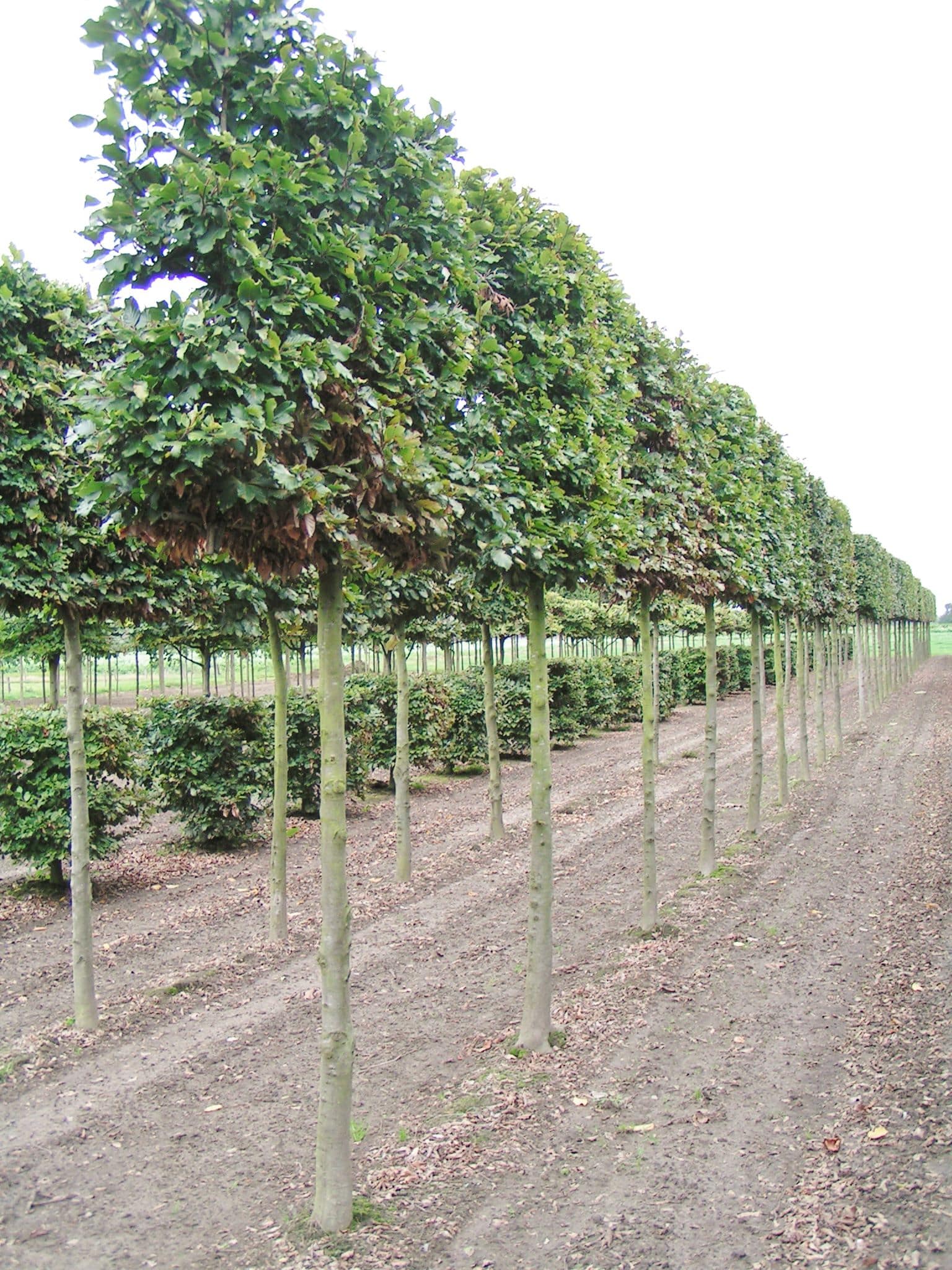
Fagus sylvatica is a popular native deciduous tree which is ideal for pleaching due to retaining its leaves throughout the winter months. The leaves emerge fresh green, turning a splendid yellow-orange in the autumn. Beech prefers nutritious, well drained soils, and can be planted in sun or shade.


  1. Tilia platyphyllos (Broad-leaved Lime)

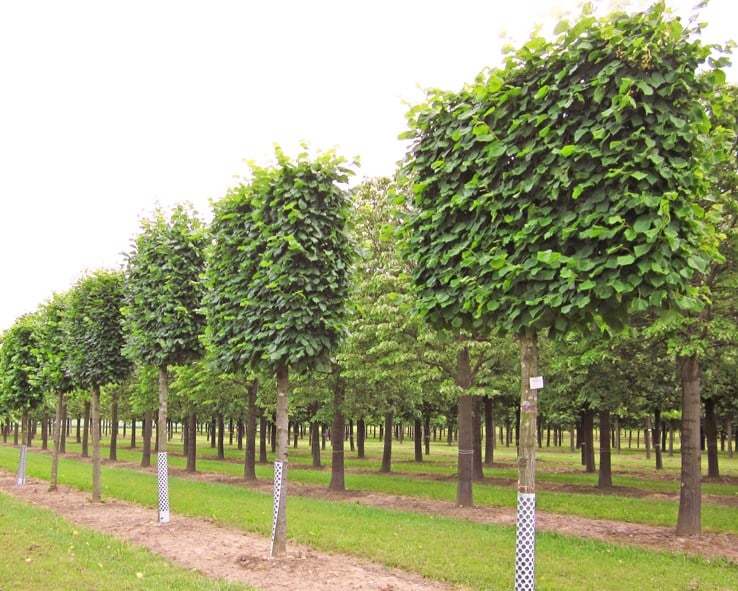
Tilia platyphyllos is a fast growing lime tree which has luscious heart-shaped foliage which gives the tree a healthy appearance all year round; the leaves turn a lime yellow autumn. This tough tree responds well to regular pruning. It will tolerate most soil types, including clay soils


Contact to us about your requirements for screening or privacy in your garden; we can supply and plant many types of attractive trees in both evergreen and deciduous species.

Foxglove tree heat tolerant
Top 10 Trees for hot dry summers

Drought Tolerant Trees

NEW – Updated blog Best Trees for Climate Change

Trees are a great addition to almost any garden, creating structure and seasonal interest.  Gardens provide a sanctuary and respite from the busy world and planting trees are adapted to hotter, drier climates could be useful to these changing climatic conditions.

Here we list our top 10 trees that are suitable for hot dry or heat wave summers.

We have a range of quality trees for suitable as specimens, screening or for small gardens; just ask our horticultural experts.

Top 10 Trees for hot dry summers

  1. Betula pendula (Silver Birch)
  2. Catalpa bignonioides (Indian Bean Tree)
  3. Cercis siliquastrum (Judas tree)
  4. Corylus colurna (Turkish Hazel)
  5. Crataegus crusgalli (Cockspur thorn)
  6. Ginkgo biloba (Maidenhair Tree)
  7. Gleditsia triacanthos (Honey Locust Sunburst)
  8. Koelreuteria paniculata (Golden Rain Tree)
  9. Paulownia tomentosa (Foxglove Tree)
  10. Pyrus calleryana Chanticleer (Callery Pear)


  1. Betula pendula

This tree, more commonly known as a Silver Birch, has an elegant appearance. As a young tree it has a distinctive white bark with darker lines and shapes decorating the trunk. Its main branches are long and often grow horizontally, creating a semi weeping habit.  The Pendula produces yellow catkins in the spring and light green foliage that shoots early and becomes orange-yellow in the autumn. This is a hardy tree which is frost resistant and regularly the first to grow back on bare or damaged land.

  1. Catalpa bignonioides

The Indian Bean tree originates from America. It is a magnificent medium to large tree which comes into leaf late and produces exotic orchid-like flowers in mid-summer followed by beans in the autumn. The leaves turn a pale yellow in the autumn. A good specimen tree.

  1. Cercis siliquastrum

Cercis siliquastrum is a bushy, deciduous small tree which produces its bloom straight from the trunk and stems. The rosy-lilac, pea-like flowers cover the wood in May, producing a stunning floral display that is quite uncharacteristic of a tree. Following the flowers, the bright green, almost heart shaped leaves are developed on the Judas tree, later accompanied by dark purple tinted seed pods in July.

  1. Corylus colurna

Also known as the Turkish Hazel, Corylus colurna is a stately and imposing tree at maturity. Its leaves are bright green and are broadly heart shaped. During the early spring long, yellow catkins are produced, followed by clusters of nuts that are contained in frilly looking husks in autumn.  It has a rough, corky bark that becomes more distinguished as it matures.

  1. Crataegus crusgalli

Crataegus crusgalli (or Cockspur thorn) is a small tree with horizontal, spreading branches and a flat-topped shape at maturity. It has showy white flowers, brick-red fruits, glossy summer and vibrant, multi-coloured autumn foliage, and bold winter texture.

  1. Ginkgo biloba

The Ginkgo biloba or Maidenhair Tree has bright green fan-shaped leaves, with two leaf blades. In autumn time, these wonderfully shaped leaves turn a clear and bright yellow. Ginkgo biloba forms a large specimen with a conical shape at maturity. It is extremely hardy and is a great choice for parks and avenues. Mature female plants produce fruits which bear a distinctive smell.

  1. Gleditsia triacanthos Sunburst

The Gleditsia triacanthos or Honey Locust Sunburst is a pretty and delicate looking tree which has a rounded and spreading form. The frond-like foliage is often late to appear, emerging a brilliant lime yellow colour and ageing to light green as the summer progresses. Unlike its parent, this cultivar is thornless.

  1. Koelreuteria paniculata

Koelreuteria paniculata is known as Pride of India, or the Golden Rain Tree. Its profuse small yellow flowers develop in late spring and these form lantern-shaped fruits that turn red in the autumn when its green leaves turn a rich yellow. Grow as a specimen tree in well-drained or moist but well-drained soil in full sun Golden Rain Tree thrives best on free draining soils with a sunny aspect.

  1. Paulownia tomentosa

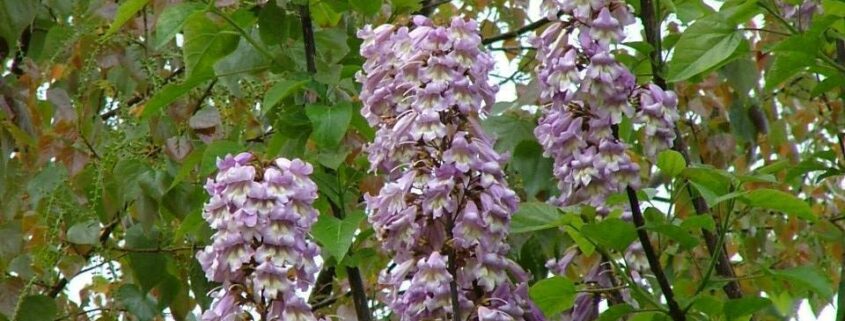
The Paulownia tomentosa  or Foxglove tree, is a pretty and an unusual tree; it has extremely large, bright green, hairy leaves which can reach up to 30cm across and appear to come directly from the bare wood of the tree. In May this tree will produce large spikes of rich purple flowers, very similar to the foxglove. It is fast growing and sprawling, the wood is very light making it easy to prune. Paulownia tomentosa does best in sunny, reasonably sheltered sites.

  1. Pyrus calleryana Chanticleer

The Pyrus calleryana Chanticleer or Callery Pear is a medium tree, with side branches stretching upwards creating a narrow, conical shape. It has ovoid leaves, which emerge as early as March and are a glossy, lush green which last through to November, when they change to a reddish-purple before falling. It produces a small, pear-shaped fruit around 1 cm thick.
Pyrus calleryana Chanticleer is a very hardy tree and is resistant to frost, heat, wind and pollution.

Platanus Acerifolia
Top 10 Street Trees

Trees for Urban Areas

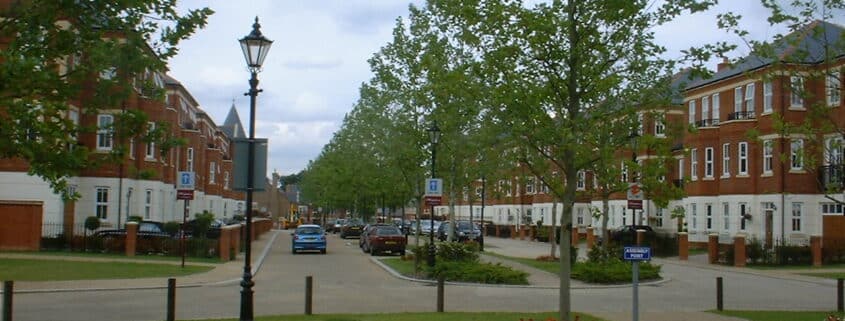
Trees can enhance all environments, even urban ones with a wide range of environmental, social and economic benefits; street trees in urban parks have been found to improve physical and mental health, improve aesthetics and environmental quality, which can lead to increased investment and the local economy.

Our list of the best trees for urban planting are as follows:  (originally featured in magazine FutureArc)

  1. Carpinus betulus Frans Fontaine (Upright Hornbeam)
  2. Ginkgo biloba (Maidenhair Tree)
  3. Koelreuteria paniculata (Golden Rain Trees)
  4. Liquidambar styraciflua (American Sweet Gum)
  5. Nyssa sylvatica (Sour Gum)
  6. Platanus× acerifolia  (Plane Trees)
  7. Pyrus calleryana Chanticleer (Callery Pear)
  8. Sorbus torminalis (Wild Service Trees)
  9. Tilia cordata (Small-leaved Lime)
  10. Ulmus hollandica Lobel (Lobel Elm)

See Forestry Commission article for more details on street tree planting programmes.

Top 10 Street Trees

Carpinus betulus Frans Fontaine (Upright Hornbeam)

Distinctive features: Bright green foliage in the spring, turning to gold and orange in the autumn. It tolerates pollution and soil compaction, making it an excellent choice for street tree planting. Upright Hornbeam will do well in most soils, including clay and chalk. It is a good choice for poor soil conditions.
Average height/ crown size: 20m Retains its columnar shaped crown of only 3m

Maintenance/Planting tips: 20-25years to maturity; will tolerate most soil types

Ginkgo biloba (Maidenhair Tree)

Distinctive features: The leaves are fan shaped, appearing bright green in spring and then bright yellow in the autumn. Tough enough to cope with air pollution, reflected heat and light, Ginkgo biloba is a great contender as a street tree.

Average height/ crown size: 20m+ forms a large specimen with a conical shape at maturity

Maintenance/Planting tips: 20-50years to maturity; will tolerate most soil types

Koelreuteria paniculata (Golden Rain Trees) 

Distinctive features: Koelreuteria paniculata’s profuse small yellow flowers develop in late spring and these form lantern-shaped fruits that turn red in the autumn when its green leaves turn a rich yellow.

Average height/ crown size: 7-12m forms a rounded crown

Maintenance/Planting tips: 20-50 years to maturity; thrives best on free draining soils with a sunny aspect.

Liquidambar styraciflua (American Sweet Gum)

Distinctive features: Liquidambar styraciflua or American Sweet Gum is a large, undemanding tree, which is pollution resistant. It’s large star-shaped leaves emerge bright green in the spring then changing to fabulous red, purple and gold colours throughout the autumn; Liquidambar is one of the very best trees for autumn colour and one of the last deciduous trees to drop its leaves.

Average height/ crown size: 20m+ matures to a rounded crown

Maintenance/Planting tips: more than 50 years to maturity; Best in fertile, well-drained soil, not suitable for lime or chalky soils

Nyssa sylvatica (Sour Gum)

Distinctive features: The Tupelo or sour gum is a wonderful tree for autumn foliage with its green summer leaves turning yellow, orange and even red into late autumn

Average height/ crown size: 12-17m Pyramidal in habit when young, it can develop into a large broad tree at maturity

Maintenance/Planting tips: 20-50 years to maturity; requires free draining acid soil

Platanus × acerifolia  (Plane Trees)

Distinctive features: The London Plane is the classic street tree, due to its high tolerance of pollution; It is also known as Platanus × hispanica. This large tree features multi-coloured, flaking bark, which includes patches of white, green, grey and brown. It’s large shiny, dark green leaves, transform into a copper colour in autumn before falling

Average height/ crown size: 20-30m forms a broadly pyramidal shaped crown at maturity

Maintenance/Planting tips: 20-50 years to maturity; tolerant to all soils but thrives

Pyrus calleryana Chanticleer (Callery Pear) 

Distinctive features: A medium height tree, the glossy lush green leaves emerge in March and last through to November, when they change to a reddish-purple before falling. It’s a very hardy tree, resistant to frost, heat, wind and pollution

Average height/ crown size: 15m side branches stretching upwards creating a narrow, conical shape

Maintenance/Planting tips: 20-50 years to maturity; Prefers to be in full sun, adapts well to most soils

Sorbus torminalis (Wild Service Trees)

Distinctive features: This has white flowers in spring give way to sharp tasting fruits in the autumn whilst its bark resembles a chequer pattern as it matures. Its green summer leaves turn orange and yellow in the autumn

Average height/ crown size: 10-15m a columnar habit when young and graduates to a broad oval when mature.

Maintenance/Planting tips: 20-50 years to maturity; thrives in most free draining soils, not in full sun, it is tolerant of atmospheric pollution and dry conditions.

Tilia cordata (Small-leaved Lime)

Distinctive features: This native tree produces fragrant white flowers in mid-summer and is a good tree for attracting bees and the yellow leaf colour in autumn is attractive. An excellent choice for avenues and parks.

Average height/ crown size: 20–30m a broad oval crown

Maintenance/Planting tips: 20-50 years to maturity; It tolerates heat, is frost hardy and wind resistant, but is sensitive to salt. This tree is happy on most soils

Ulmus hollandica Lobel (Lobel Elm)

Distinctive features: The fairly small rough leaves are dull dark green with dense veins and a double-serrated edge. They are bronze coloured when they emerge, remaining on the tree for a long time, often until late November. It is very resistant to sea wind, making it suitable for use in coastal areas.

Average height/ crown size: 20-30m  pyramidal tree with a dense crown

Maintenance/Planting tips: 20-50 years to maturity; It favours moist and light soils.