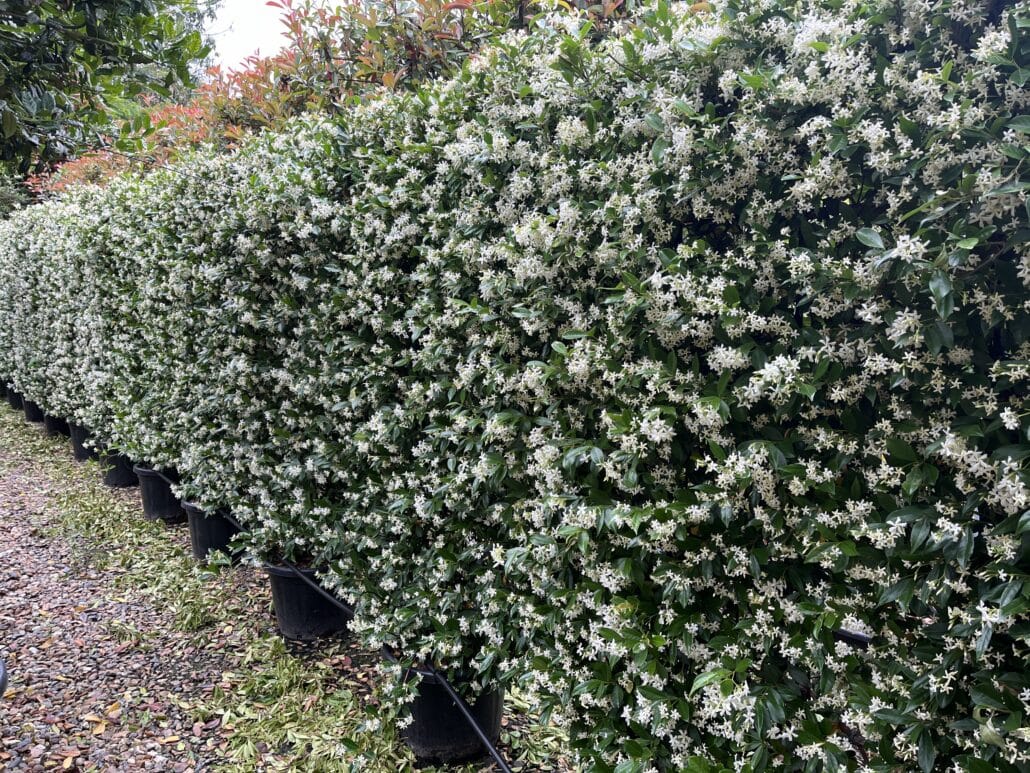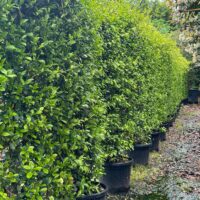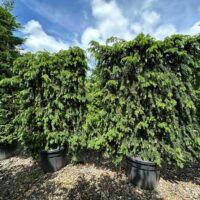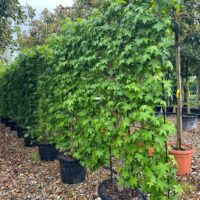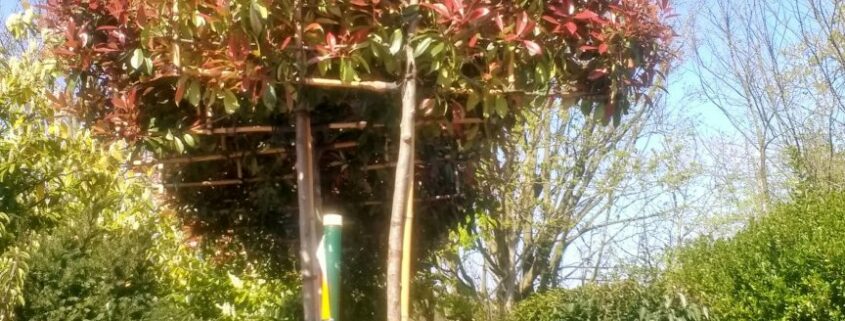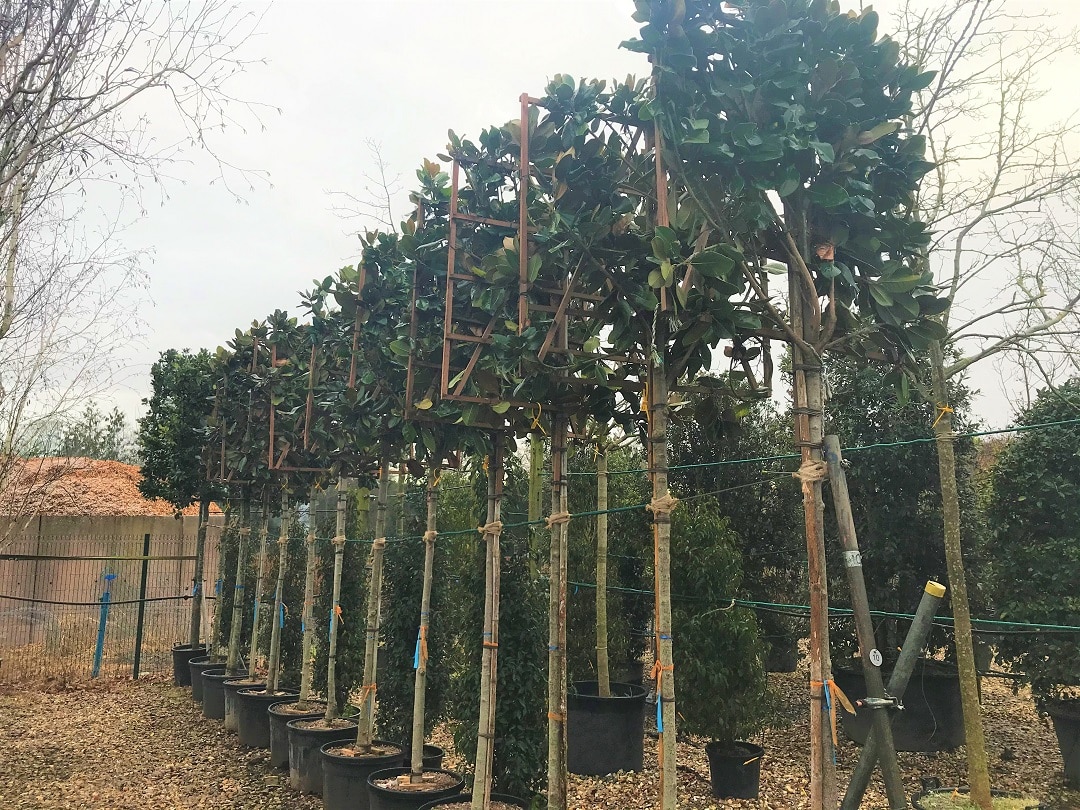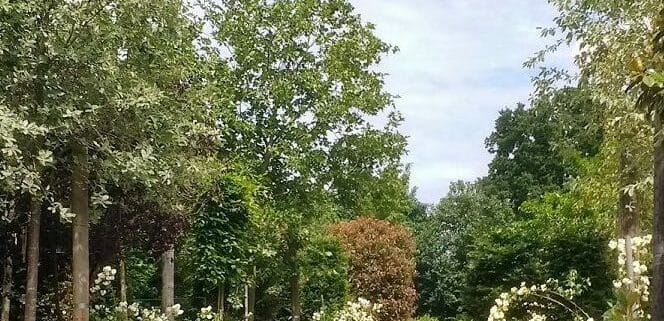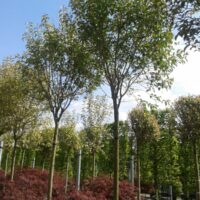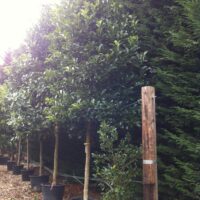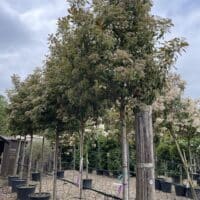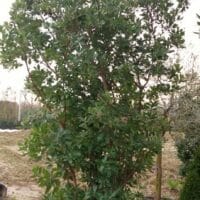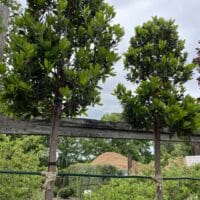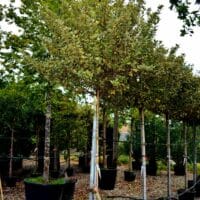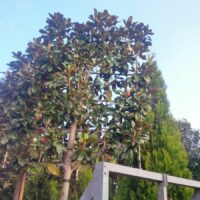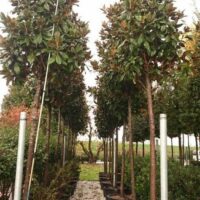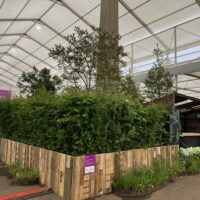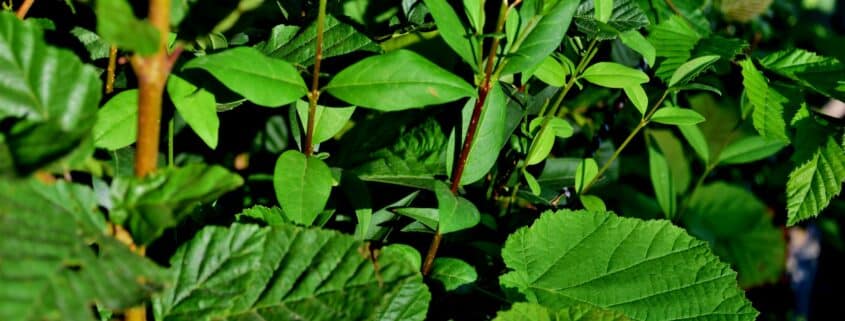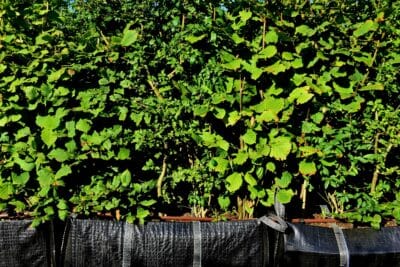
Pleached Viburnum tree at our Buckinghamshire nursery
Narrow Privacy Trees for Your Garden

Narrow Privacy Trees for Your Garden

Pleached Trees Explained

Pleached trees are a smart solution when you need privacy trees for planting along boundaries without losing precious lawn or planting space. These tall elegant tree screens deliver height and foliage where you need it most, giving privacy without taking up valuable ground area. Pleached trees combine structure and style, offering a beautiful, living way to screen your garden, terrace or patio.

What Are Pleached Trees?

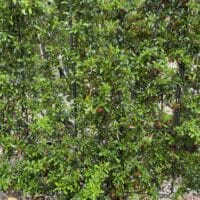
Pleached Viburnum against a plain background showing its screenig ability

Pleached trees are tall, narrow trees that have been trained onto a framework so that their branches form a slim, continuous canopy above a clear trunk. These “hedge on stilts” rise above fence lines, creating a leafy screen without using up room at the base. This design makes them perfect privacy trees for planting alongside hedges, especially in smaller gardens or urban outdoor spaces.

By training young shoots along a supporting frame, these trees develop into neat, flat screens that block views while keeping your garden feeling open and uncluttered.

Why Choose Pleached Trees for Privacy?

Efficient use of space
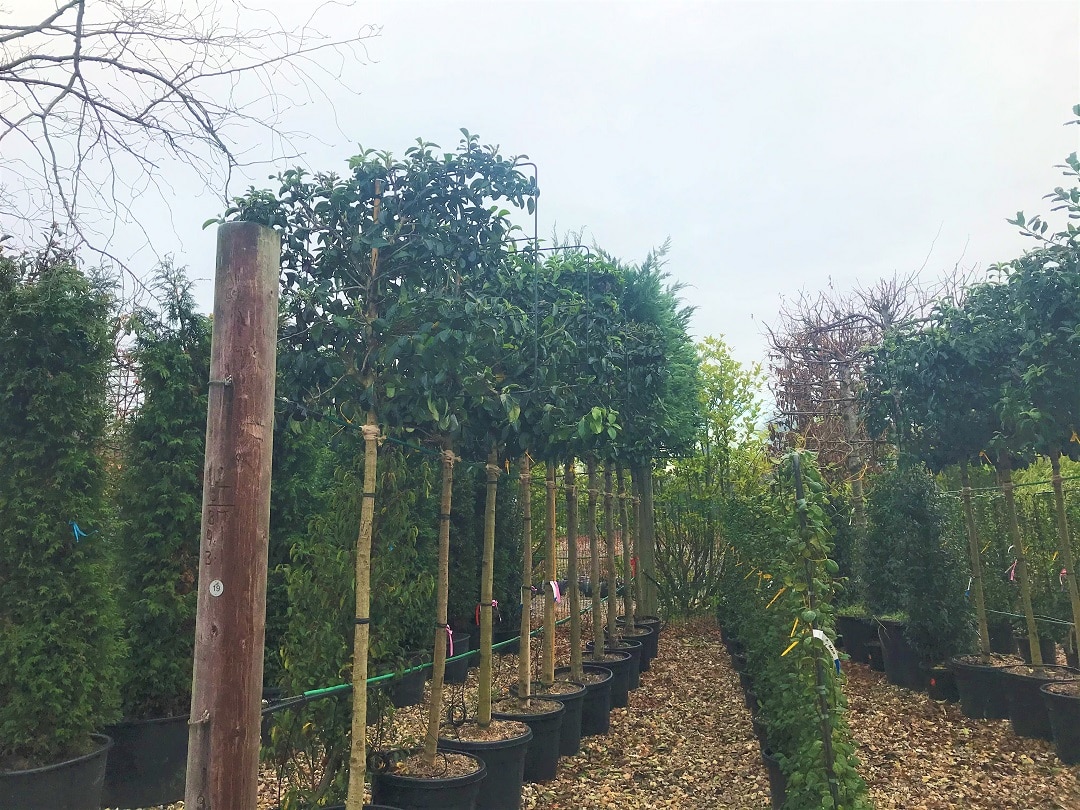
Pleached trees have a narrow profile with a clear stem up to around 1.8–2m high. That means they give you coverage above eye-level without taking up the space on the ground that traditional screening shrubs or wide hedges need. Perfect if you want privacy without sacrificing space for lawn, seating or planting.

Above-fence screening
Because pleached trees start their leaf canopy well above fence height, they’re especially good at screening sightlines from windows, balconies or neighbouring houses, where a standard hedge just isn’t tall enough.

Structured, elegant look
Whether you want a contemporary linear screen or a formal garden feature, pleached trees add architectural interest. Their straight trunks and tidy canopies create a clean, refined aesthetic that enhances garden design.
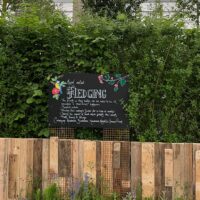
Where to Use Pleached Privacy Trees

• Along fences and hedges: plant them in a row to make an elevated green screen that blends seamlessly with your boundary planting.
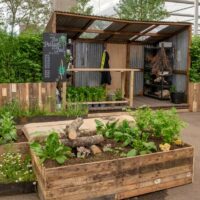
• In narrow gardens: their slim trunks and controlled canopy make them ideal where space is tight.
• To frame outdoor spaces: use pleached trees to define patios, paths, or seating areas with height and form.
• To add year-round structure; choose evergreen pleached varieties if you want privacy in every season.

Sizes and Spacing

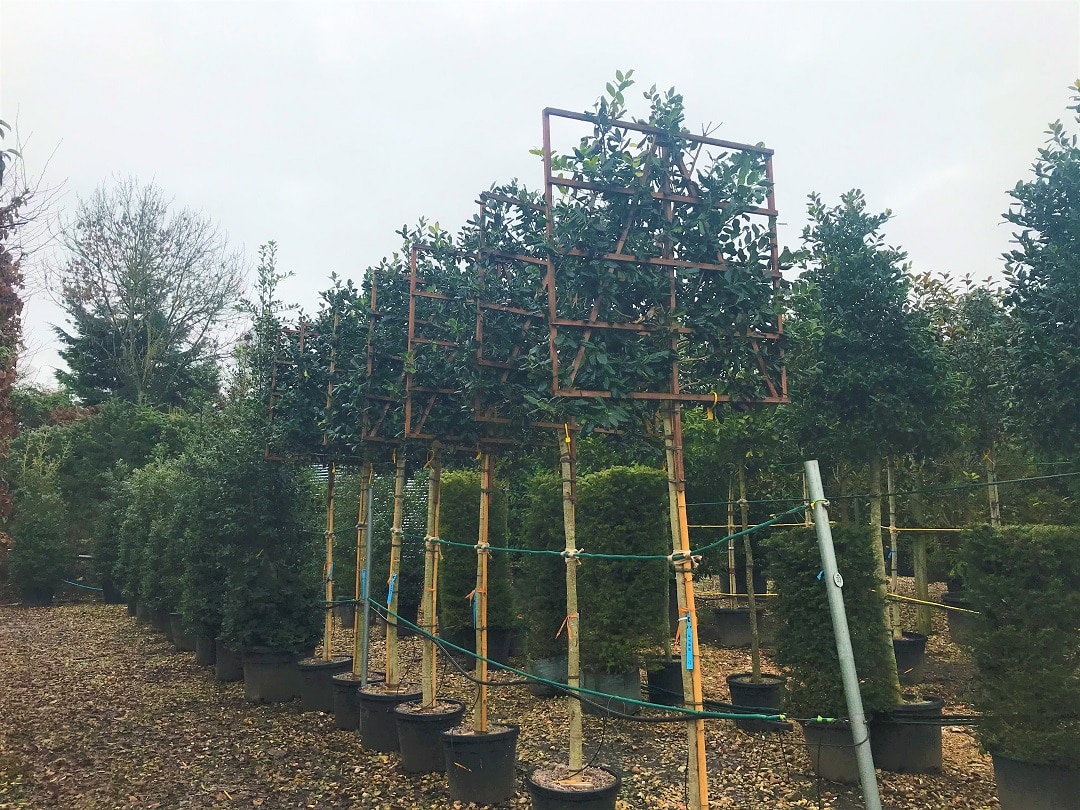
Pleached trees typically have a clear stem around 1.8–2m before the canopy begins, with the foliage often trained into a square or rectangular frame. When planted in a line with their frames touching, they form an instant screen, or you can space them a little further apart and let the canopy fill in over time.

Caring for Your Pleached Privacy Trees

• Planting distance: Keep trees at least 40cm from fences or walls to give roots room to establish.
• Training new growth: In the first few years, encourage horizontal growth along the framework to speed up canopy formation.
• Regular pruning: A light prune once or twice a year helps maintain shape and density while ensuring the screen stays neat and effective.
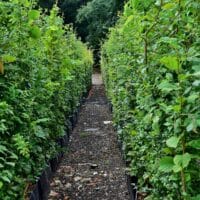
• Watering and mulch: Keep the soil moist in dry spells and mulch in spring to support healthy growth.

Pleached Trees In stock

We always have a range of quality trees for decorative or screening purposes in stock in our Buckinghamshire nursery. These include a comprehensive range of pleached trees, species include:

You can view of our full tree availability lists here

All trees and hedges supplied by Practicality Brown are Plant Healthy certified, UK-grown, professionally maintained and supplied ready for planting, ensuring reliable establishment and excellent results.

Contact us today for more information about pleached trees, or if you would like details of our planting service.

We look forward to helping you with your enquiry.

Instant Hedge In Focus: Beech or Hornbeam

Instant Hedge In Focus: Beech or Hornbeam

When choosing an instant hedge for your garden or boundary, two of the most popular deciduous species are Beech (Fagus sylvatica) and Hornbeam (Carpinus betulus).  Both are classic hedging species that are native to the UK, and can be seen throughout the countryside as mature trees. While they share some similarities, each brings its own strengths and aesthetic qualities.

This is Practicality Brown’s guide to choosing Beech or Hornbeam instant hedging.

Foliage


Beech (Fagus sylvatica)

  • Beech has veined green leaves that turn a classic golden brown/yellow in the autumn becoming browner throughout winter.
  • Unlike most deciduous trees, Beech holds onto its dead leaves into winter, providing excellent winter privacy, year-round screening and a warm, muted texture.

Hornbeam (Carpinus betulus)

  • Hornbeam’s bright green matte leaves are veined and have serrated edges. These become golden yellow in the autumn then papery brown. The foliage can be retained over winter, although not as reliably as Beech
  • The distinct foliage emerges in vibrant green shades early in the spring.

Bark

  • Beech bark is slate-grey and very smooth, adding refinement to the hedge’s appearance.
  • Hornbeam bark is also grey but rougher, giving a more rugged, woodland-feel.

Growth rate

  • Beech is relatively slow-growing at around 20-30cm of growth per year and typically needs just a trim once a year to maintain a formal shape.
  • Hornbeam is more vigorous (up to 40-60cm/year), but to keep it dense and well-shaped, it may need to be pruned twice a year.

Planting location

  • Beech prefers well-drained soils but does poorly in waterlogged or very heavy clay soils. It tolerates sun or partial shade but does not like seaside locations, as salt is harmful.
  • Hornbeam is more tolerant of moist or heavier soils, making it a great option where drainage is an issue. It can also be planted in full sun or shade, and can cope with exposed sites.

Common features for both Beech and Hornbeam

  • Both these native hedges are very wildlife friendly, providing food and shelter for species.
  • Neither is particularly prone to serious pest or disease issues when used in hedging.
  • They are horse-friendly and as such can be used in fields and paddocks, although horses may nibble on leaves, twigs, or bark.
  • A good level of wind protection with their foliage full.
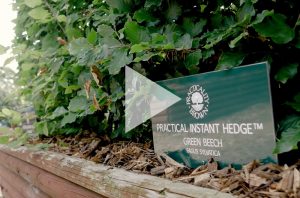
  • Available as Practical Instant Hedge™ in 1m-long hedging bags, in heights up to 1.8m

Which to Choose: Beech or Hornbeam?

Both Beech and Hornbeam are native hedges that you will see all throughout the United Kingdom.

Choose Beech if you:

  • Need winter screening, because many leaves stay on through the colder months.
  • Like a classic, refined hedge with elegant form
  • Have well-drained or chalky soil where Beech thrives.

Choose Hornbeam if you:

  • Want a very dense hardy hedge
  • Prefer a more textured, traditional hedge
  • Need a hedge that can handle variable or damp soil, including clay or heavier ground.

Beech and Hornbeam


We also have stunning Copper or Purple Beech available as a Practical Instant Hedge™ too.

Why Choose Practical Instant Hedge?

Choosing Practical Instant Hedge™ from Practicality Brown gives you all the benefits of a mature hedge from day one;

A mature hedge from day one — no waiting, no gaps, no uncertainty

  • Immediate privacy and screening
  • Instant impact without years of waiting
  • A natural alternative to fencing or walls
  • Long-term value and durability

All hedges supplied by Practicality Brown are Plant Healthy certified, UK-grown, professionally maintained and supplied ready for planting, ensuring reliable establishment and excellent results.

Contact us today for more information on our Practical Instant Hedge™, or if you would like details of our planting service.


High Hedge Plants


High Hedge Plants up to 8m high

A Practical Solution For Tall Screening

When privacy, structure and year-round greenery are required, standard hedging doesn’t always go high enough. For projects that require screening above a standard fence height, high hedge plants offer a practical and flexible solution. At Practicality Brown, we specialise in mature hedging that delivers immediate results, from our renowned Practical Instant Hedge™ to a wide range of taller individual hedging plants.

What Are Hedging Plants?

High hedge plants are supplied as individual, fully feathered plants, making them ideal for creating tall garden boundaries or extending the height of existing hedges. Available in sizes ranging from approximately 2 metres up to an impressive 8 metres, they provide instant presence and structure, without waiting years for small plants to grow to the required height.

They are particularly useful where above fence height is needed to screen out an unwanted view or to replace felled trees etc.
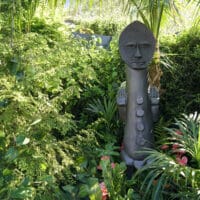
Why Choose Individual High Hedge Plants?

Individual high hedge plants are a popular choice for both private gardens and larger landscape schemes thanks to their versatility and reliability. Key benefits include:

  • Immediate height and screening, perfect for privacy and shelter
  • Dense, fully feathered growth from ground level upwards
  • Flexible planting options, ideal for irregular spaces or tailored designs

They can be used to fill gaps, raise the height of an existing hedge, or create striking standalone screens that define and soften outdoor spaces.

Thuja plicata ‘Excelsa’ – The Most Popular Choice for High Hedges

Thuja plicata ‘Excelsa’ is our most popular choice for high evergreen hedging, valued for its reliability, appearance and performance.
With rich green foliage and a strong upright habit, Thuja ‘Excelsa’ delivers excellent year-round screening and responds well to regular trimming. It maintains density even at height, making it particularly well suited for privacy screening.

Combining High Hedge Plants with Practical Instant Hedge™

For a number of projects, the best results come from combining solutions. Practical Instant Hedge™ provides immediate maturity and structure in easy-to-plant 1-metre sections for heights up to 2m, while individual high hedge plants allow you to introduce extra height if required.
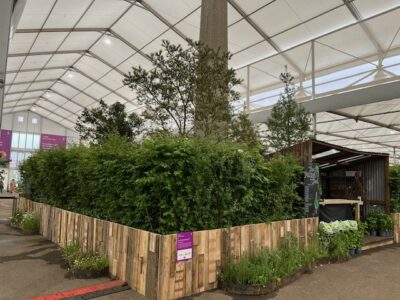
This flexible approach ensures a hedge that looks established from day one, while meeting the exact requirements of your garden or landscape.

We are also Plant Healthy Certified!

For extra peace of mind all our plants are now Plant Healthy Certified, as well as being professionally maintained and supplied ready for planting, ensuring reliable establishment and excellent results.

Contact us today for more information on our hedging solutions or if you would like details of our planting service.


Christmas Hours

Seasonal Opening Hours Winter 2025/6

As the year draws to a close, we hope that you are able to enjoy the winter festivities and look forward to the New Year.
We close at lunchtime on Christmas Eve 24 December and re-open on 2 January.

There is plenty of information to browse on our website, from instant hedges and trees to the news blog and even videos about Practical Instant Hedge and Practicality Brown!

You are welcome to visit our nursery in Iver to view our screening trees and see our hedges. Why not plan your visit in the New Year – we look forward to working with you!

Merry Christmas and Happy New Year

from everyone at Practicality Brown.


Laurus nobilis instant hedge
Instant Hedge In Focus: Bay Laurel

Instant Hedge In Focus: Bay Laurel

Bay Laurel (Laurus nobilis) is a classic evergreen plant, valued for its rich green foliage and versatility. Best known for its aromatic leaves used in cooking, Bay Laurel also makes an excellent instant hedge, offering year-round screening with added character and practicality.

Supplied as a mature, pre-grown hedge, our Bay Laurel instant hedging provides an immediate sense of structure and privacy, making it an ideal choice for both traditional and contemporary garden designs.

Why Choose Bay Laurel Instant Hedge?

Evergreen, Year-Round Privacy

Bay Laurel is fully evergreen, retaining its glossy, dark green leaves throughout the year. This makes it an excellent choice for permanent screening, boundary definition and wind protection, ensuring your garden looks well-structured for every season.

Aromatic, Multi-Purpose Foliage

One of Bay Laurel’s most distinctive features is its aromatic leaves, which release a rich fragrance when crushed. As well as being visually appealing, the foliage can be harvested and used in cooking, adding an extra practical benefit to this attractive hedge.

Smart, Upright Growth Habit

Bay Laurel has a naturally upright and tidy form, lending itself particularly well to formal hedging and structured garden layouts. When clipped, it forms a dense, neat hedge with aa elegant appearance.

Seasonal Interest

In spring, Bay Laurel produces small pale-yellow flowers, followed by dark berries later in the year. These subtle seasonal changes add interest and help support garden wildlife.

Excellent Response to Pruning

This species responds well to trimming, becoming denser with regular pruning. It can be maintained as a classic hedge or shaped more formally, making it a versatile option for a wide range of garden styles.

Growth & Maintenance

Bay Laurel has a moderate growth rate, typically around 20–30cm per year once established. This makes it easy to manage while still allowing it to thicken and mature over time.

  • Pruning: Best carried out once a year, usually in summer
  • Soil: Prefers well-drained soil
  • Position: Thrives in full sun to partial shade
  • Maintenance: Low to moderate once established

Its resilience and adaptability make it suitable for many UK garden conditions.

Why Choose Practical Instant Hedge?

Choosing Bay Laurel as a Practical Instant Hedge™ gives you all the benefits of a mature hedge from day one:

  • Immediate privacy and screening
  • Instant impact without years of waiting
  • A natural alternative to fencing or walls
  • Long-term value and durability

As with all our Practical instant hedging, Bay Laurel is a Plant Healthy certified, UK-grown, professionally maintained and supplied ready for planting, ensuring reliable establishment and excellent results.

Contact us today for more information on our Practical Instant Hedge™, or if you would like details of our planting service.


Best Trees for Climate Change

Trees Suitable for Climate Change

Native Trees

Some of the United Kingdom’s most valued trees are struggling to keep pace with climate change and increasing extreme weather.”

Weather patterns are changing, and Britain experiences frequent hotter, drier summers. Some of Britain’s native trees find the changing weather conditions challenging, and they are not growing to their full potential.

It is becoming clearer to many experts that planting just native trees is no longer sustainable. Worldwide weather patterns seem to be changing, and it is time to look beyond planting purely native species, and focus on including trees that accept warmer and drier conditions and are less prone to tree pest and disease issues.

The Best Trees for Climate Change

There is, perhaps surprisingly, a good choice when considering which are the best trees for climate change. Our Managing Director, Alastair Beddall, makes his recommendations and suggests that planting design should include:

  • Both native and non-native species
  • Species that tolerate high UV levels, sustained heat, urban stress and drought
  • Shade trees to give cover and protection from sun for animals, humans and shade loving understorey
  • A broad mix of species to avoid losing all planting should some species fail

Alastair’s recommended resilient trees to plant

The following trees are all in stock at our Buckinghamshire nursery. We can quote plant your chosen trees. Contact our Horticultural team trees@pracbrown.co.uk for details.

Deciduous Trees

Beech (Fagus sylvatica)

Our native beautiful Common Beech. It can grow very large when planted as a single specimen tree. Fresh green leaves on foliation which become a stunning orange-copper in autumn. Its leaves do not fall in autumn, often staying attached until spring. Mature height 40m


Downy Birch (Betula pubescens)

Also known as Betula pubescens, this tall deciduous has shoots that are greyish red purple, covered in short, soft, pale hairs. Its light green leaves become orange-yellow in the autumn. This hardy tree prefers damper environments, and tolerates shady conditions. Mature height 20m


Hornbeam (Carpinus betulus)

Carpinus betulus (Common Hornbeam) is a native tree. It has bright green leaves which turn a shining yellow through to brown in the autumn. Hornbeam tolerates a wide range of conditions; sun and shade, cool to hot, as well as windy sites. It is happy in both dry and wet soils as well as either chalk or clay. Mature height 20m


English oak – Quercus robur

Our native English Oak (also known as pedunculate oak) is a large majestic tree that can be found across the length and breadth of the UK. The golden-brown autumn foliage is accompanied by acorns. This tree is excellent for supporting a wide variety of wildlife. A very hardy specimen, frost and wind resistant and tolerant of different soils. Mature height 30 metres


Red Oak – Quercus rubra

Quercus rubra or red oak has large leaves that are dark green and turn a glorious red-orange in autumn. Another hardy oak, Quercus rubra can tolerate dry soil, drought and air pollution, it thrives best on fertile well drained soils. Mature height 20+ metres

Please note: all Quercus are subject to special movement conditions due to oak processionary moth


Rowan – Sorbus aucuparia ‘Sheerwater Seedling’

Sorbus aucuparia is a Mountain Ash that is equally at home in urban environments. The creamy white flowers hang in clusters in the spring and are followed by bright red, bird friendly, red-orange berries in autumn, just as the leaves turn yellow and gold. This wildlife friendly tree will tolerate a wide range of soil conditions and does not mind being planted in semi-shade and is useful where space is limited, providing year-round interest. Mature height 12 metres


Common European Lime Tilia europaea

An impressive parkland tree, and seemingly resistant to most of the tree diseases, these fast-growing trees have an elegant, tidy shape. Its fragrant yellow flowers that hang in cymes, whilst it’s lush green leaves turn a vivid yellow just before they fall in autumn. This is a tough tree, thriving on most soils, and is frost hardy. It is good for urban areas and is wind resistant. Mature height 20+ metres

Other recommended limes include the following. We do not currently hold stock of these, but ask us for a quote:

• For avenues look at Small leafed Lime (Tilia cordata)

• For wider avenues or parkland European Lime (Tilia europea Pallida), or Broad leafed Lime (Tilia platyphyllos).

A favourite Lime is the Silver Lime (Tilia tomentosa) with its silvery underleaf which twinkles in the wind. Its large pyramidal broad crown provides livestock with shelter and has good yellow autumn colour. Not usually affected by aphids so little honey dew drop.


Silver birch – Betula pendula

Betula pendula or Silver Birch, is beloved for its elegant appearance. Its main branches are long and often grow horizontally, creating a semi weeping habit.  The Pendula produces light green foliage that shoots early, becoming orange-yellow in the autumn. This is a hardy tree which is frost resistant and regularly the first to grow back on bare or damaged land. Mature height 20 metres


Sweetgum – Liquidambar styraciflua

Liquidambar styraciflua or American Sweet Gum is a large, undemanding tree, which is known for its beautiful greeny-red leaves and fabulous autumn colour. It is pollution resistant, grows well on acid soil, tolerates poor drainage but less so drought. Slow growing, it will eventually reach up to 20m tall, but taking around 50 years to achieve this.


Evergreen Trees

Portuguese Laurel – Prunus lusitanica

Prunus lusitanica, or Portuguese laurel is a small, hardy evergreen tree of spreading habit. The foliage is dark green and glossy and striking against new red shoots. Very hardy, tolerates heat and drought, and can handle sun or shade in most soils including shallow chalk. Prunus lusitanica can be planted in either sun or shade, but it dislikes wet ground. Mature height 4-6 metres


Strawberry Tree – Arbutus unedo

Arbutus unedo is an attractive tree with young shoots that are tinged red before hardening to dark green. The small white, bell shaped flowers appear in small clusters and are produced together with the strawberry-like red fruit in the autumn, providing a contrasting display. A resilient mediterranean native that resist heat, drought and even pollution and fires. The tough evergreen leaves help to make this tree a good choice for exposed, coastal sites. Prefers a moist, well-drained soil. Mature height up to 8 metres


Magnolia-  Magnolia grandiflora gallioniensis

Magnolia grandiflora ‘Gallisoniensis’ produces beautiful, large, sweet smelling white flowers in the summer, which can be up to 25 cm in diameter. At maturity this tree becomes broad and round headed with a bushy habit. Resilient to diseases, heat and drought, it thrives in full sun although prefers sheltered spot away from cold drying winter winds and frost. Mature Height 15 metres


Loquat Tree  – Eriobotrya japonica

Large exotic looking tree with attractive leaves and eye-catching yellow and orange fruit. Although it has proved to be reliably hardy in the UK, frost pockets are best avoided. It requires well drained soil and tolerates heat and drought well. It needs sun to look its best. Mature Height 8 metres


Western Red Cedar – Thuja plicata

Thuja plicata is a fast-growing large evergreen tree with horizontal branches forming a loose, columnar habit, reaching an ultimate height of up to 35m. A popular alternative to Leylandii, as it is slower growing but is still a dense evergreen conifer. Thuja can be hard pruned, unlike Leylandii. A hardy tree with dense foliage, this tree is ideal for screening. Grows well in most conditions, prefers cultivated soil.

More Weather Tolerant Trees

The above list is not exhaustive, and we do have further recommendations of trees that may be resilient to climate change. The following trees are not held in stock at our Buckinghamshire nursery, but we can source and quote to supply and plant them (should you require the latter) Please contact our Horticultural team trees@pracbrown.co.uk


Deciduous Trees:

Foxglove Tree – Paulownia tomentosa

Honey Locust – Gleditisia triacanthos

Judas Tree – Cercis siliquastrum

Black Birch – Betula nigra

Black Walnut – Juglans nigra

Broad leafed Lime – Tilia platyphyllos

Dawn Redwood – Metasequoia  glyptostroboides

European Lime – Tilia europea Pallida

Indian Horse Chestnut – Aesculus indica

Pin Oak – Quercus palustris

Scarlet oak – Quercus coccinea

Sycamore – Acer Pseudplatanus

Tulip Tree – Liriodendron tulipifera


 Evergreen Trees:

Coast Redwood – Sequoia sempervirens

Wellingtonia or Giant Sequoia – Sequoiadendron giganteum

Contact us if you would like to discuss your garden or landscape project, our Horticultural Team would be delighted to help.


Further reading and information can be found at:

RHS Trees for Climate Change

RFS Planting for resilient woods

BBC Rising temperatures threaten UK trees

Forestry England Tree species for the future


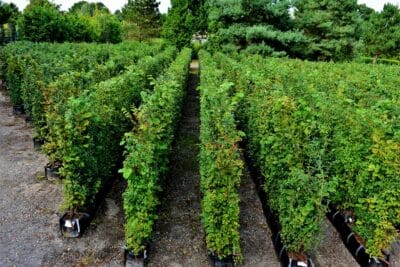
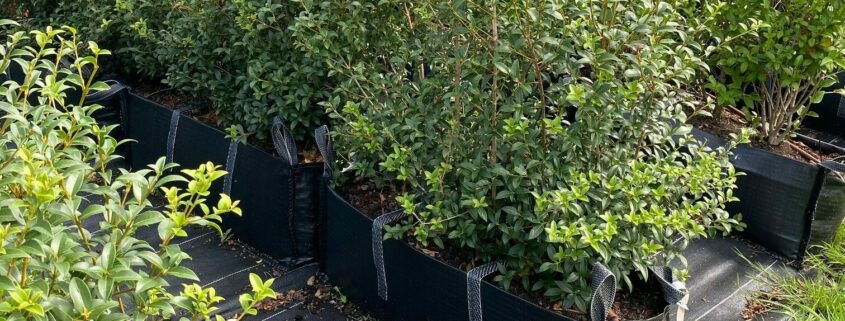
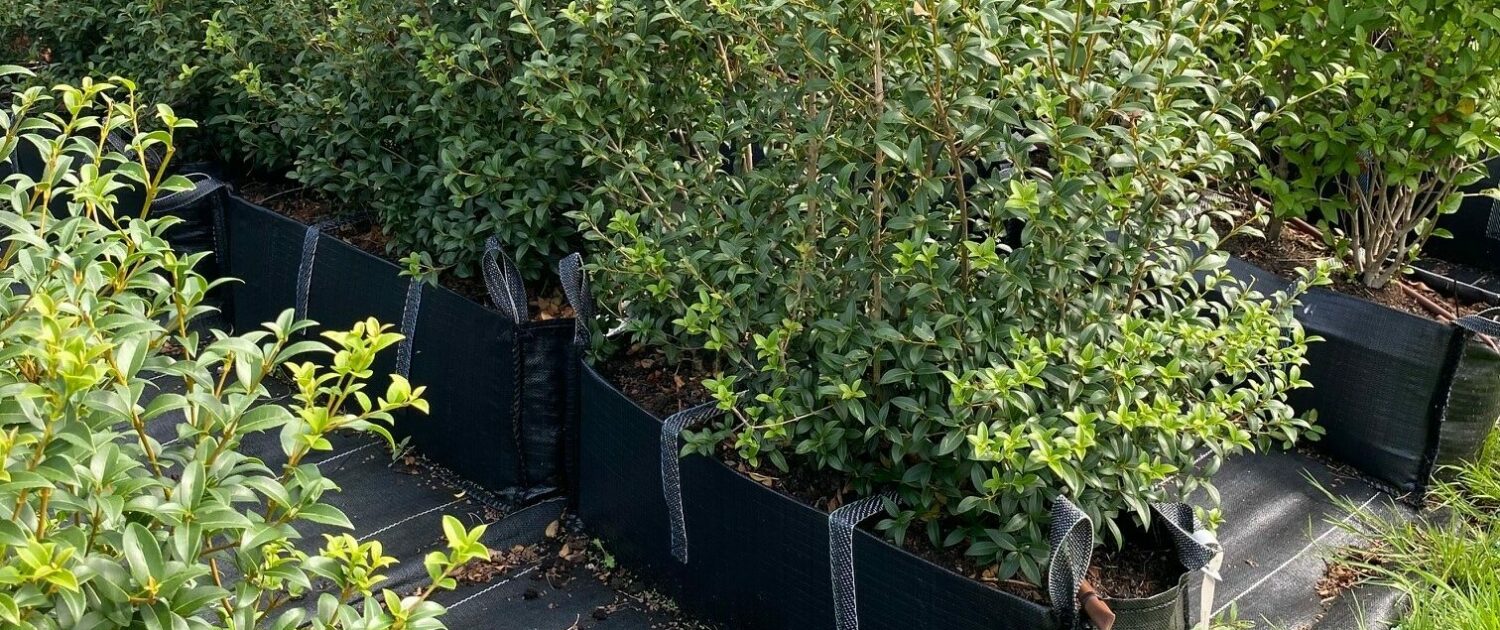
Row of Practical Instant Ilex meserveae hedge grown in bags on the nursery
Instant Hedge In Focus: Blue Holly

What is Blue Holly?

Our UK grown Blue Holly (Ilex meserveae) Practical Instant Hedge™ is an innovative mix of Blue Maid and Blue Prince holly, which ensures a delightful display of small white flowers in spring and plump red berries in autumn. Blue Holly provides a dense instant evergreen hedge, offering year-round privacy and a haven for the local wildlife.

Top features of Blue Holly

  1. Easy to grow with attractive glossy blue-green foliage on purple stems, white spring flowers and autumn red berries.
  2. Attracts birds and insects with food and shelter.
  3. Dense foliage provides privacy and protection from wind and noise.
  4. Minimal maintenance and easy to prune.
  5. Tolerates most soils and conditions, including part sunny positions.
  6. The foliage is great for flower/foliage displays during autumn and is perfect for any Christmas wreaths/decorations.

Why plant our Practical Instant Hedge™

Grown in one metre bags at our Iver Nursery, Buckinghamshire, our mature Practical Instant Hedge™ is easy to plant and offers immediate impact and privacy. Our Ilex meserveae Blue Maid/Blue Prince mix is currently available at heights of 1.4 to 1.6m and 1.6 to 1.8m.

Our production method ensures that the hedge is suitable for planting all year round. See just how easy it is to plant our hedge, watch our HOW TO video on the Practicality Brown website.

How to buy Practical Instant Hedge™

Buying, or enquiring, about our instant hedges is simple:

  • Call 01753 652022 to speak to our Horticultural Team
  • Email hedge@pracbrown.co.uk
  • Order online here.

If you would like to find out more about our wide range of evergreen and deciduous Practical Instant Hedges, please visit our website or book a visit to our nursery. We offer a supply only, or supply and plant on all the trees and hedges we sell.

Line of pleached trees French Laurustinus
Evergreen Pleached Trees – Viburnum tinus ‘Lucidum’

Pleached Viburnum tinus ‘Lucidum’: Evergreen Screening with Style

Pleached trees are an ideal solution if you’re looking for privacy and structure into your garden. Among the most versatile choices is Viburnum tinus ‘Lucidum’ – an elegant, evergreen variety, also known as French Laurustinus.

This tree is admired for its glossy dark green foliage, which stays dense throughout the year, ensuring reliable evergreen screening. Unlike many evergreens, it offers seasonal interest. Small fragrant creamy-white flowers are borne in flattened flowerheads, up to 10cm in diameter, from late winter into spring and are followed by attractive blue-black berries in autumn. This is a wildlife friendly evergreen.

 French Laurustinus pleached form

Pleached Viburnum tinus ‘Lucidum’

Pleached Viburnum tinus ‘Lucidum’ create narrow screens of foliage above a clear stem. This makes it especially useful in modern gardens where space is at a premium. You can achieve privacy without the bulk of hedging, while still allowing light and space beneath the canopy.

Where pleached Viburnum trees work best:

  • Along boundaries, to soften fencing and create a “living wall” of evergreen foliage.
  • Around patios or terraces, for stylish screening from neighbours.
  • Beside driveways or garden paths, adding structure without crowding ground-level planting.
  • In contemporary garden designs, bringing both formality and year-round interest.
  • As an avenue of trees along a driveway or property entrance, for an elegant approach.

Easy to maintain and responsive to pruning, Viburnum tinus ‘Lucidum’ is as practical as it is attractive. With its evergreen cover, seasonal flowers and berries, and refined pleached form, it’s a fantastic investment for any garden. These trees provide instant structure, elegance, and privacy, making them the perfect choice for transforming your outdoor space.

Available in stock now

Pleached Viburnum tinus ‘Lucidum’ trees ready for planting now 3-3.5m high on 1.5m x 1.2m frame

Special Offer £770 each

We have a good quantity of these stunning, mature specimens in stock at our Buckinghamshire nursery, and the Pleached Viburnum tinus ‘Lucidum’ trees are available at just £770 each (plus vat and delivery) — no other discounts are available on this special price. We are making way for new arrivals.

With our Plant Healthy certification, you can be sure that all our plants meet rigorous biosecurity standards.

Contact us today to arrange a visit, and to talk about our team about planting for you and project management.

Hedge maintenance at Practicality Brown
Plant Healthy – Improving Plant Expertise

Practicality Brown is Plant Healthy!

We are proud to announce that we are Plant Healthy certified, and have met the stringent Plant Healthy Certification scheme requirements.

By adopting the Plant Health Management Standard, we are continuing to commit to robust biosecurity and pathogen controls. This means buyers and landscapers can trust that our hedges and trees, are grown, handled and supplied under rigorous standards designed to protect UK plant health and the wider countryside.

This certification confirms Practicality Brown’s dedication to best-practice horticulture, reducing the risk of spreading pests and ensuring safer plant supply chains—benefiting clients, designers, and the environment alike. This is an ongoing process of continual monitoring throughout the growing season.

Plant management and maintenance at Practicality Brown

Professionalism

  • Enhanced Credibility: The Plant Healthy certification underlines our commitment to plant health, safeguarding landscapes and natural habitats.
  • Environmental Integrity: This reinforces our commitment to sustainability, compliance, and high-quality horticultural practice.

 Trust

Garden owners, designers and landscapers can now specify Practicality Brown with increased confidence, knowing that our plants meet rigorous biosecurity standards.

Whether designing show gardens, such as RHS Garden Shows featuring our award-winning Practical Instant Hedge™ or creating habitats for biodiversity, this certification signals our continued excellence and leadership in the horticultural industry.

Visit The Nursery

We would be delighted to show you around our Tree and Hedge nursery in Iver, Buckinghamshire, and show you our best horticultural practice in action.

We are located near to M4, M25 and M40 junctions, about 6 miles from Heathrow Airport. Also, just 15 miles from central London and 1 mile from Iver Station. With regular trains from London Paddington.

Please phone us first 01753 652022 to book a nursery visit and we will ensure we have an expert on hand to show you around.

We look forward to meeting you and helping you with your enquiry.

Hedge management at Practicality Brown

Hosepipe bans – what its means for your new plants

Irrigation!

How to look after your plants during a hosepipe ban

Hosepipe bans, also known as a Temporary Use Ban, have been implemented by several water companies across the country.  These Bans restrict hosepipes usage and are imposed by water companies to try and save water during periods of high demand or low supply.

Not all water companies have implemented a ban (as at 22 July) but the following companies have:


Which water companies have a hosepipe ban?

  • Southern Water across Hampshire and on the Isle of Wight.
  • Thames Water in Gloucestershire, Oxfordshire and parts of Berkshire and Wiltshire.
  • South East Water across Kent and Sussex.
  • Yorkshire Water much of Yorkshire, parts of north Lincolnshire and parts of Derbyshire.

Check with your own water company about their restrictions.


What do the restrictions mean

Each water company will have its own specifications, but in generally, you must not use hosepipes for:

  • Watering gardens, plants, lawns or allotments
  • Filling or topping up ponds, paddling pools, swimming pools or fountains
  • Cleaning paths, patios, driveways, vehicles or windows

However, you can continue to use drip irrigation systems with a timer and pressure-reducing valve, plus:

  • Water plants or veg using a bucket or watering can
  • Fill ponds to protect fish or other aquatic animals.
  • Business use: garden centres, landscape companies, agriculture and car washes may have exemptions under certain conditions


How long will it last?

The ban is indefinite and will be reviewed based on rainfall and reservoir levels. Most water companies will lift the ban when conditions allow but it could be extended.

For more details on the areas affected, see BBC’s report


Practicality Brown support responsible water use and always recommend an automatic irrigation systems help the hedging plants establish themselves in their new permanent location.

If you would like any further information on looking after the new Practicality Brown plants in  your garden, please contact our Horticultural Team.