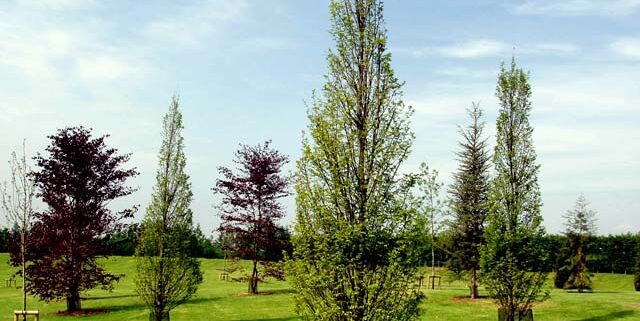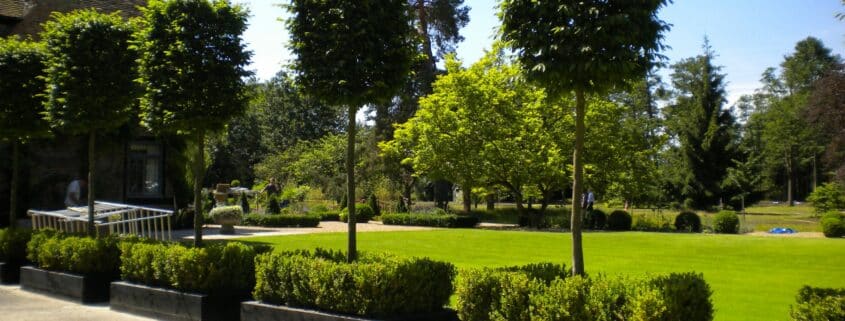
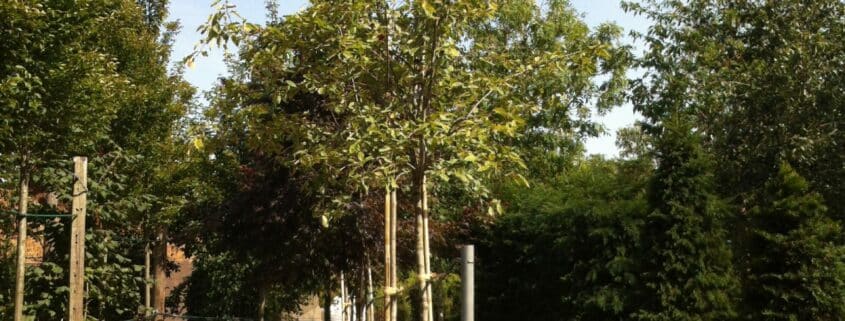
Create shade in your garden using trees
Best Shade Trees for UK Gardens

Best Shade Trees for UK Gardens: How to Cool Your Space This Summer

Discover the best shade trees for UK gardens and learn how the right semi-mature tree can create cooler, more comfortable outdoor spaces. From compact ornamental trees for small gardens to larger canopy trees for expansive landscapes, our expert guide will help you choose the perfect tree for natural shade.

How to Create Cooler Outdoor Spaces with Trees for Natural Shade

As UK summers become warmer and periods of extreme heat become more frequent, gardens are having to work harder than ever before. Outdoor spaces are no longer simply somewhere to admire from the house – they’ve become places to relax, entertain, work and spend time with family and friends. Creating natural shade is now an important consideration in garden design, helping outdoor spaces remain comfortable and enjoyable throughout the summer months.

Yet as temperatures rise, many gardens become uncomfortable during the hottest parts of the day. South-facing patios can become too hot to enjoy, lawns dry out more quickly, and plants can struggle under prolonged periods of intense sunshine.

Fortunately, nature has already provided one of the most effective solutions: trees.

The right tree does much more than cast shade. It cools the surrounding air, creates comfortable outdoor living spaces, supports wildlife, improves air quality and brings year-round beauty to the landscape. Whether you have a compact courtyard garden or a generous family plot, choosing the right tree can transform how your garden feels and functions.

Why Trees Are the Best Way to Cool a Garden

Unlike pergolas, parasols or shade sails, trees don’t simply block sunlight – they actively cool the environment.

Their leafy canopies intercept solar radiation before it reaches the ground, while thousands of leaves release moisture into the air through a natural process known as evapotranspiration.¹ This process reduces surrounding air temperatures, creating noticeably cooler spaces beneath and around the canopy.

Research from the World Resources Institute suggests that strategically planted trees can reduce surface temperatures and make outdoor spaces feel significantly cooler, with differences of up to 14°C recorded in some urban environments.2

Studies published by the Arboriculture & Urban Forestry journal also highlight that the greatest cooling benefits come from selecting appropriate tree species with healthy, well-developed canopies, while the combined effects of shade and evapotranspiration significantly reduce ambient temperatures.3

In practical terms, that means:

  • Cooler patios and terraces
  • More comfortable outdoor dining areas
  • Reduced heat reflected from paving
  • Better moisture retention in borders and lawns
  • Less stress on surrounding planting
  • Improved habitat for birds, bees and beneficial insects

Trees also provide nesting sites, shelter and seasonal food sources, making them one of the most valuable additions to any wildlife-friendly garden. As our climate continues to change, shade trees are becoming an increasingly important part of resilient garden design.

Choosing the Right Shade Tree

One of the biggest misconceptions is that you need a huge tree to create meaningful shade.

In reality, many smaller ornamental trees produce beautiful, dappled shade that’s ideal for patios and seating areas, while medium-sized trees can comfortably cool an entire family garden without overwhelming the space.

The key is selecting a species that suits both your available space and your long-term aspirations. It’s equally important to consider the tree’s eventual height and spread, ensuring it has sufficient room to mature while providing shade exactly where it’s needed.

Best Shade Trees for Small Gardens

Smaller gardens often benefit from trees that create filtered or dappled shade rather than dense cover. This allows plenty of natural light to reach surrounding planting while making seating areas far more comfortable during summer.

Malus ‘Evereste’

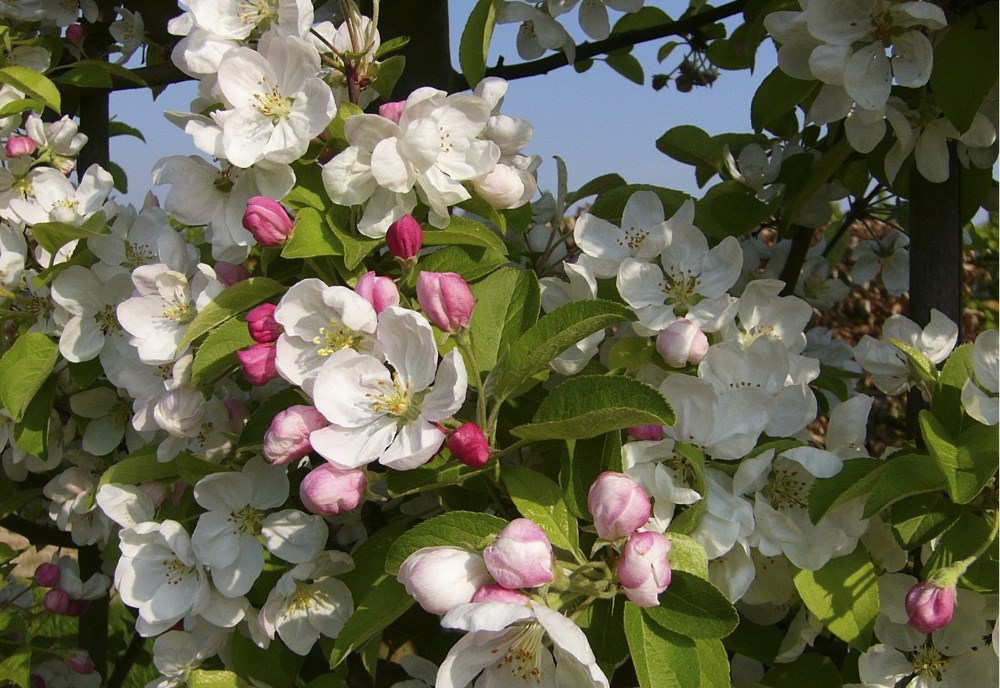
This ornamental crab apple offers spring blossom, colourful fruit and excellent seasonal interest. Its compact canopy creates gentle shade that’s perfect for outdoor dining areas while also providing an important food source for pollinating insects and birds. Mature height: 3-7m

Ligustrum japonicum (Japanese privet)

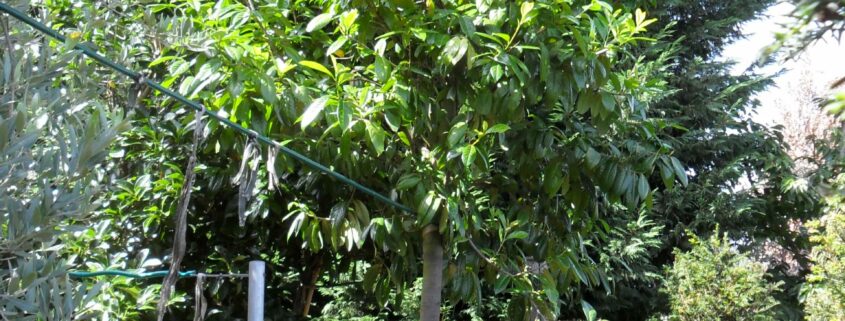
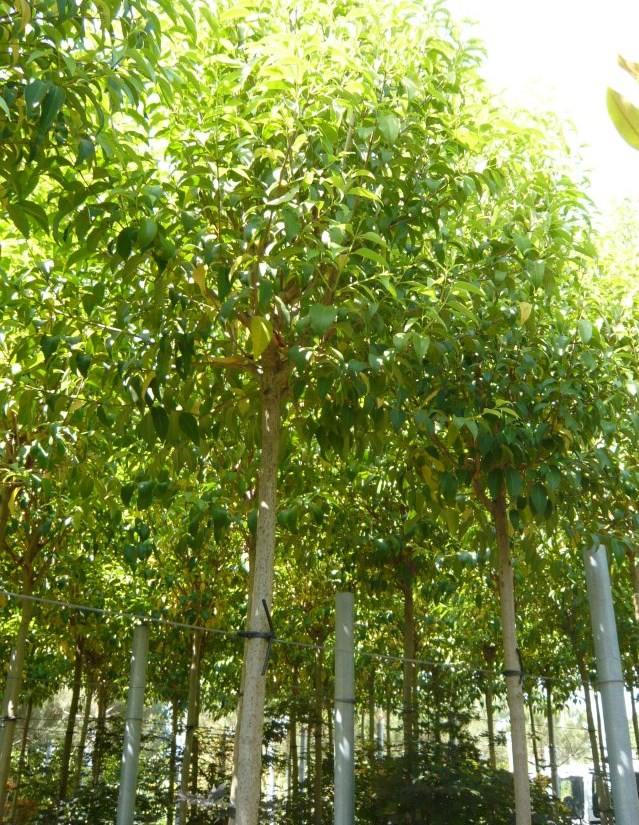
A compact evergreen tree with attractive small scented white flowers that appear from mid-summer to early autumn, followed by small round black berries. A pretty tree suitable for many gardens. Mature Height: 3-7m

Ilex aquifolium ‘Nellie R Stevens’

This is an attractive evergreen holly with lustrous, glossy green foliage. Its bright red berries provide valuable food for birds through autumn and winter, while its dense evergreen canopy offers year-round screening and welcome shade, making it an excellent choice where privacy is just as important as cooling. Mature Height: 3-5m

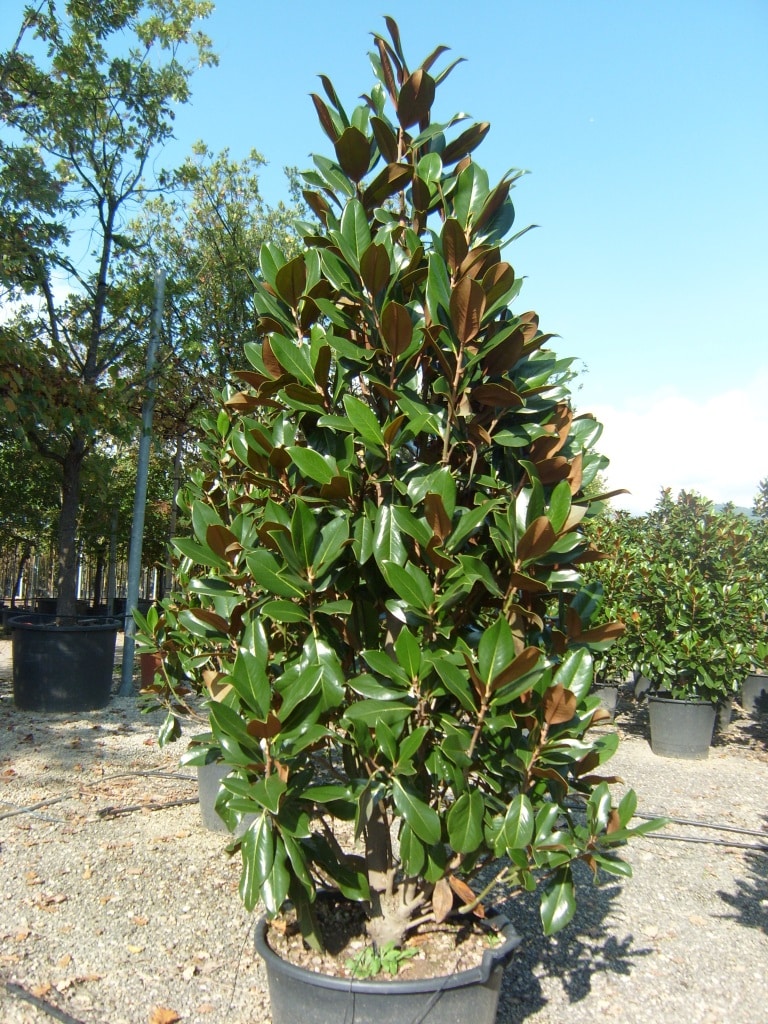
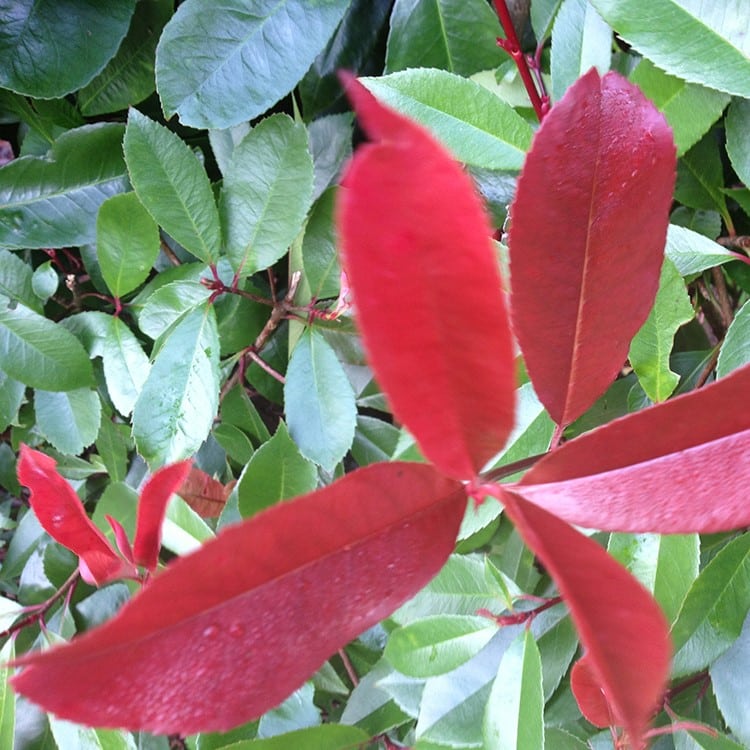
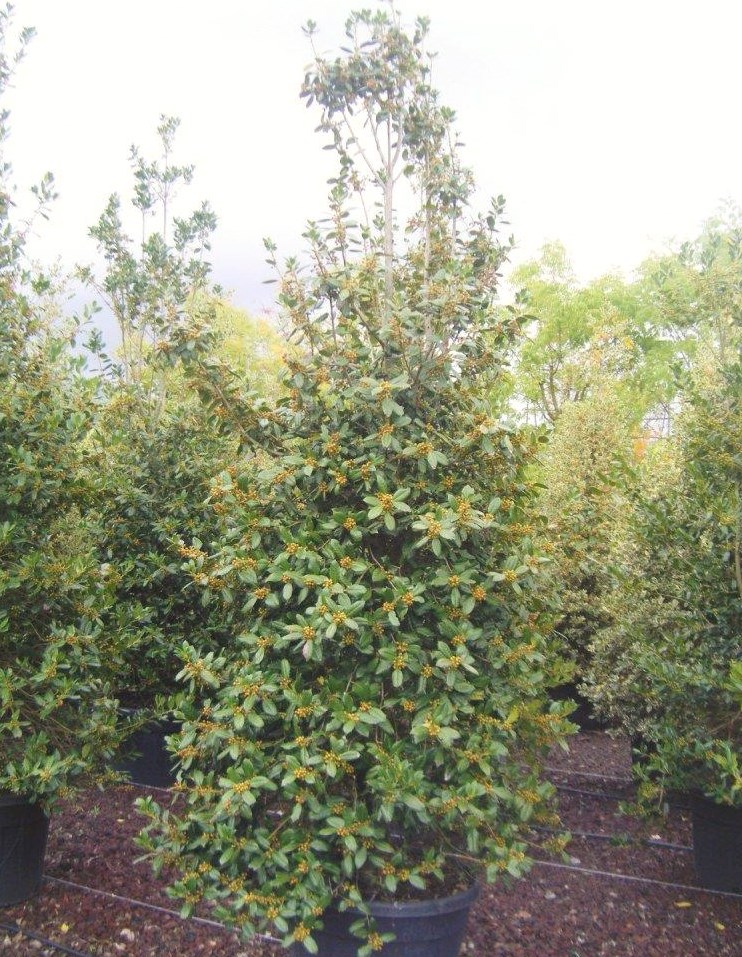
Looking for something a little more architectural? Multi-stem trees are an excellent choice for adding character as well as shade. Available in species such as Photinia Red Robin and Osmanthus aquifolium, they create an immediate architectural focal point with their sculptural branching. Their naturally airy canopies provide soft, dappled shade, making them particularly well suited to smaller gardens, courtyards and contemporary landscape schemes.

Best Shade Trees for Medium Gardens

Where a little more space is available, medium-sized trees can create generous areas of cooling shade while becoming striking focal points within the landscape.

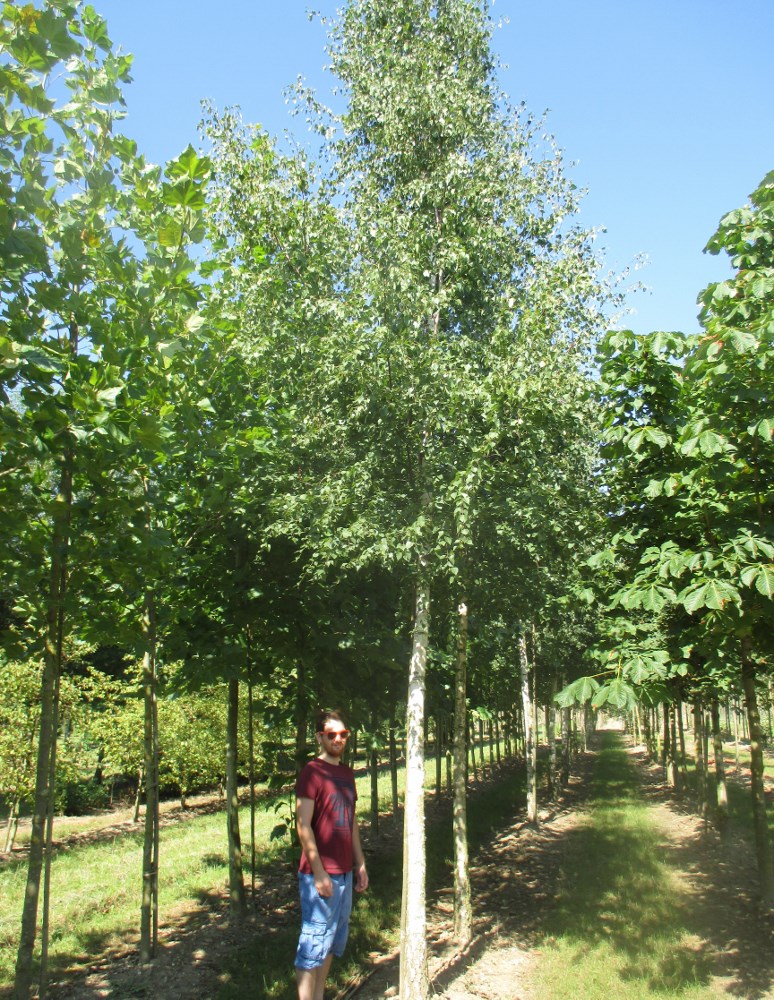
Birch Trees (Betula)Perfect tree for garden shade

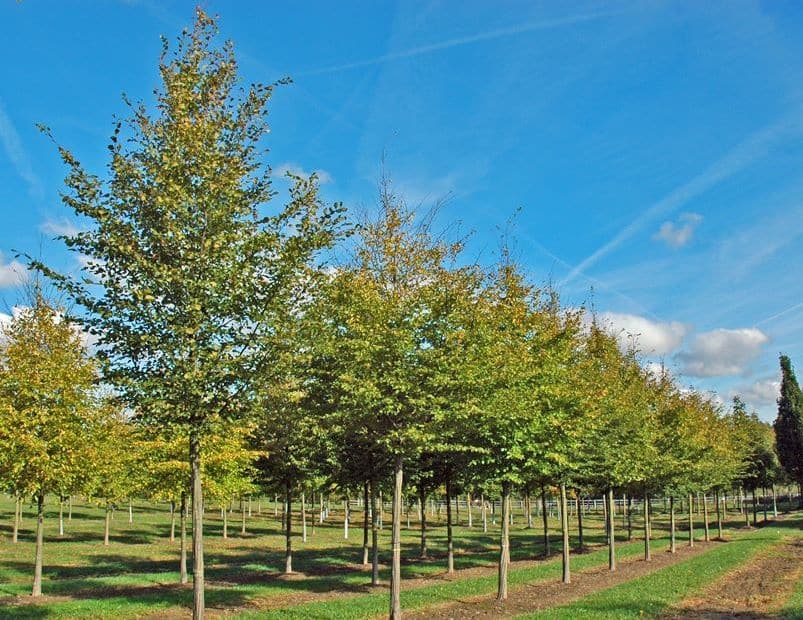
Birch trees are an excellent choice where light, dappled shade is preferred. Their elegant forms allow filtered sunlight to reach the ground while creating cooler, more comfortable seating areas.

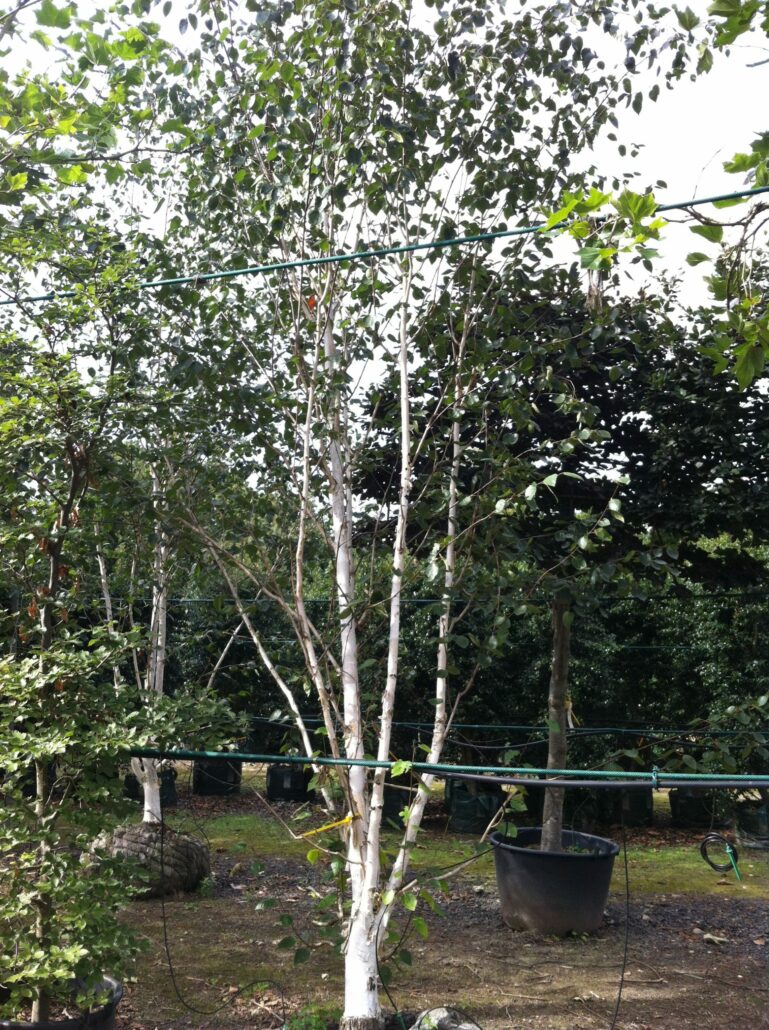
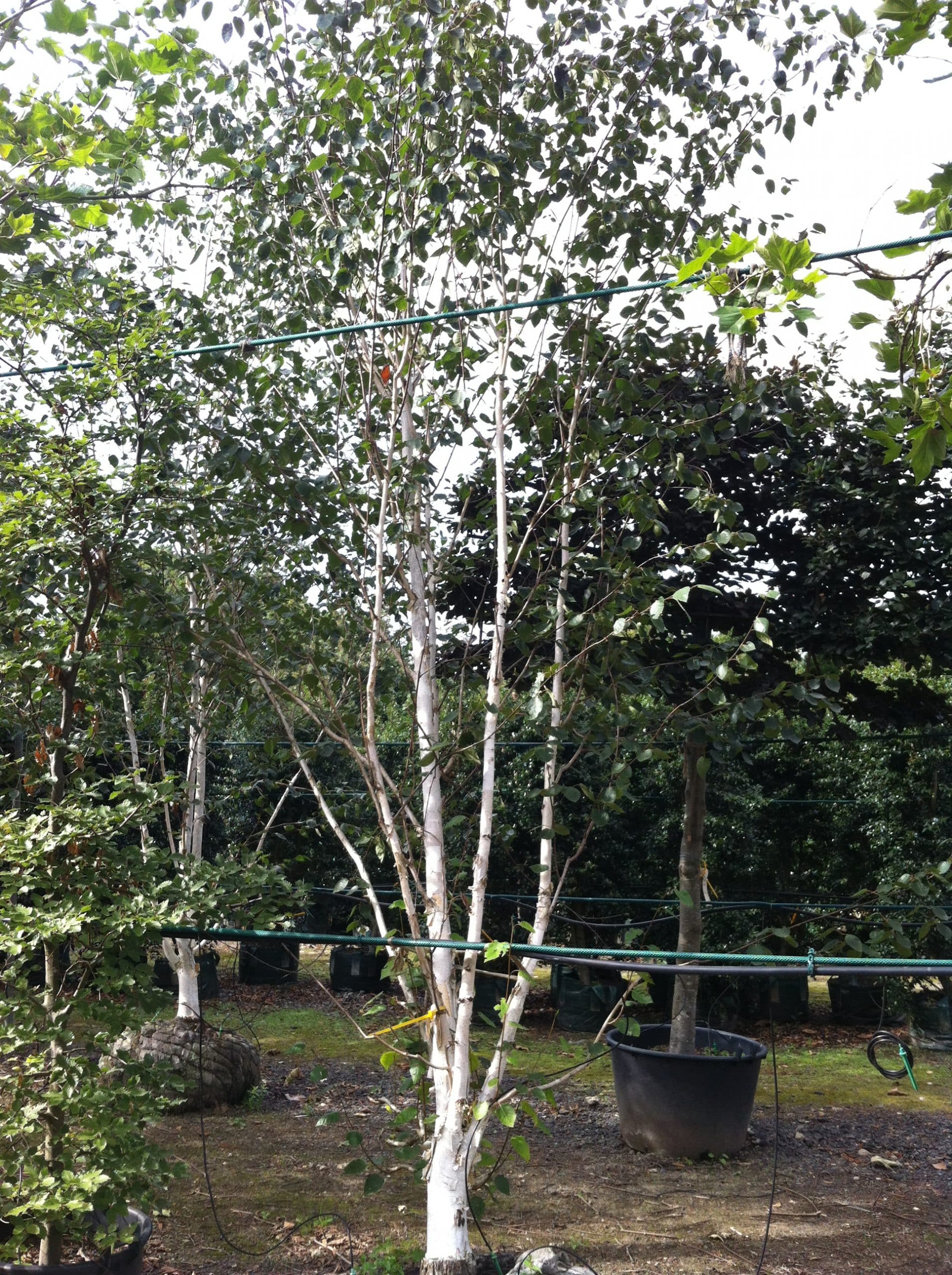
Betula pendula (Silver Birch) has branches that are flexible, with a tendancy to weep or droop. The bark starts white but, as the tree matures it develops attractive dark, deep fissures. Mature Height: 20m

Betula utilis ‘Jacquemontii’ (West Himalayan Birch) has more upright branches and distinctive thin, white bark that peels easily. Mature Height: 18m

Sorbus aucuparia Sheerwater Seedling’ (Rowan/Mountain Ash)

This urban-friendly Mountain Ash offers delicate, airy foliage that filters sunlight beautifully. Clusters of white flowers are followed by vibrant berries, attracting birds throughout autumn while providing light shade that works particularly well in wildlife-friendly gardens. Mature Height: 7-12m

Prunus cerasifera Nigra

A deciduous ornamental purple cherry plum tree that is one of the first trees to blossom in the UK.  The profuse pink flowers remain on the tree whilst the dark foliage begins to emerge, gradually fading to white and contrasting fantastically with the small blackish-purple leaves. Mature height: 10m

Shade Trees for Larger Gardens

If space allows, larger canopy trees become defining features of the landscape.

Species such as English Oak (Quercus robur), London Plane (Platanus × hispanica) and Common Lime (Tilia × europaea) provide extensive shade while becoming part of the garden’s long-term legacy.

Although these trees require careful positioning, they reward patience by creating magnificent outdoor spaces that can be enjoyed for generations.

Where Should You Plant a Shade Tree?

Careful positioning is just as important as choosing the right species.

Think about how you use your garden during the summer. Is there a patio that becomes unbearably hot by late afternoon? A children’s play area with little natural shelter? A seating area that’s only comfortable during the evening?

Planting a tree to provide afternoon shade can dramatically improve comfort without blocking valuable morning sunlight.

It’s also important to consider the tree’s mature size, root spread and proximity to buildings, allowing sufficient space for healthy growth over many years.

More Than Just Shade

While cooling is often the initial motivation, trees deliver a remarkable range of additional benefits.

Healthy trees help capture airborne pollutants, absorb carbon dioxide, reduce surface water runoff during heavy rainfall and provide valuable habitats for wildlife.

Many flowering species also support pollinators, while berries and seeds provide food for birds throughout the year.

Even in winter, deciduous trees continue to earn their place by allowing lower-angle sunlight to reach the garden after leaves have fallen – something permanent shade structures cannot offer.

Trees and Climate Resilience

Across the UK, trees are playing an increasingly important role in helping landscapes adapt to climate change.

Local authorities are expanding urban tree planting programmes to reduce heat build-up in towns and cities, while homeowners are recognising the importance of designing gardens that remain enjoyable despite rising temperatures.

Even the sporting world has embraced the benefits of shade trees. Recent discussions surrounding tree planting at cricket grounds have highlighted how species such as willow can improve spectator comfort, enhance biodiversity and help create cooler outdoor environments.

It’s another reminder that trees aren’t simply decorative, they’re part of the infrastructure that helps make places healthier, more comfortable and more resilient.

Why Choose a Semi-Mature Tree?

One of the greatest advantages of planting semi-mature trees is that many of the benefits begin immediately. Rather than waiting years for a sapling to establish, semi-mature specimens provide instant structure, a sense of maturity and meaningful shade far sooner.

For homeowners, this means creating comfortable outdoor spaces from the outset. For landscape architects and developers, it enables newly completed projects to feel established and welcoming from day one.

At Practicality Brown, all our semi-mature trees are Plant Healthy certified, ensuring they are top quality and therefore likely to establish successfully while delivering immediate visual impact.

Trees creates naturally cooler gardens

Best Shade Trees for All Sizes of Gardens

Garden size Recommended trees
Small Malus ‘Evereste’, Ligustrum japonicum, Ilex ‘Nellie R. Stevens’, Multi-stem Osmanthus aquifolium
Medium Birch, Mountain Ash, Prunus cerasifera ‘Nigra’
Large Oak, London Plane, Lime


Frequently Asked Questions

What is the best shade tree for a small UK garden?

For compact gardens, ornamental trees such as Malus ‘Evereste’, Rowan (Sorbus aucuparia), and carefully selected multi-stem specimens provide attractive shade without overwhelming the space. The best choice depends on the size, style and aspect of your garden.

Which tree provides the fastest shade?

Semi-mature trees offer immediate impact regardless of species. Fast-growing varieties such as Lime and Plane establish well and quickly develop larger canopies when planted in suitable conditions.

Can trees really make a garden cooler?

Yes. Trees reduce temperatures by blocking direct sunlight and through evapotranspiration, where water released from leaves cools the surrounding air. Together, these natural processes can significantly improve comfort during hot weather.

Should I choose a deciduous or evergreen tree?

For most gardens, deciduous trees are ideal because they provide welcome shade during summer while allowing sunlight to reach the garden in winter once their leaves have fallen. Evergreens have the benefit of offering year round screening.

How close can I plant a tree to my house?

The appropriate distance depends on the species, mature size and local ground conditions. Seeking professional advice before planting ensures the tree has sufficient room to develop while protecting nearby structures.

Finding the Right Tree for Your Garden

Every garden is unique, and the best shade tree is one that complements both the available space and the way you enjoy your outdoor environment.

Whether you’re looking for an ornamental tree to cast gentle shade across a patio or a larger specimen to anchor a family garden, choosing a high-quality semi-mature tree allows you to enjoy the benefits much sooner.

At Practicality Brown, we grow and supply one of the UK’s largest selections of semi-mature trees, with species suited to gardens of every size. Our experienced team can help you select the right tree for your site, ensuring it provides decades of beauty, biodiversity and welcome shade.

Browse our current Tree Availability List to explore our latest stock or contact our team for expert guidance on choosing the perfect shade tree for your next project.

Whether you’re creating a shady retreat in a compact town garden or designing a landscape for future generations, the right tree will reward you every summer for decades to come.


Sources

  1. Leeds Ecosystem, Atmosphere & Forest (LEAF) Centre. Plants and Water. During evapotranspiration, the Sun’s energy is used to transfer water from the leaves of plants into the atmosphere.  Available at https://leaf.leeds.ac.uk/research/plants-and-water/
  2. World Resources Institute (2025). Urban Trees Have a Cooling Effect. New Research Shows Where They Matter Most. Available at: https://www.wri.org/insights/urban-trees-cooling-potential
  3. Arboriculture & Urban Forestry (International Society of Arboriculture). Rahman, M.A. et al. Tree Cooling Effects and Human Thermal Comfort in Urban Areas: A Review of the Biophysical Processes. Arboriculture & Urban Forestry, Vol. 39, No. 4. Available at: https://auf.isa-arbor.com/content/39/4/157
Deciduous Trees

Recommended Deciduous Trees

What are deciduous trees?

While evergreen trees keep their leaves all year round, deciduous trees lose their leaves in autumn. Deciduous trees usually have attractive features such as decorative bark, flowers, coloured foliage or autumn fruits, and their shape and form create height and structure within a garden, many of which make great trees for small gardens. One of the loveliest sights in autumn is the colour of leaves on deciduous trees as they turn red, orange and gold before being lost. The discarded leaves can be gathered up in autumn to make a nutritious leaf mould.


Trees can be immensely valuable for wildlife too, providing nesting sites as well as song posts and shelter for birds. Flowering trees attract pollinating insects, while autumn fruits, seeds and nuts provide food for a wide range of birds and mammals.


Tree sizes

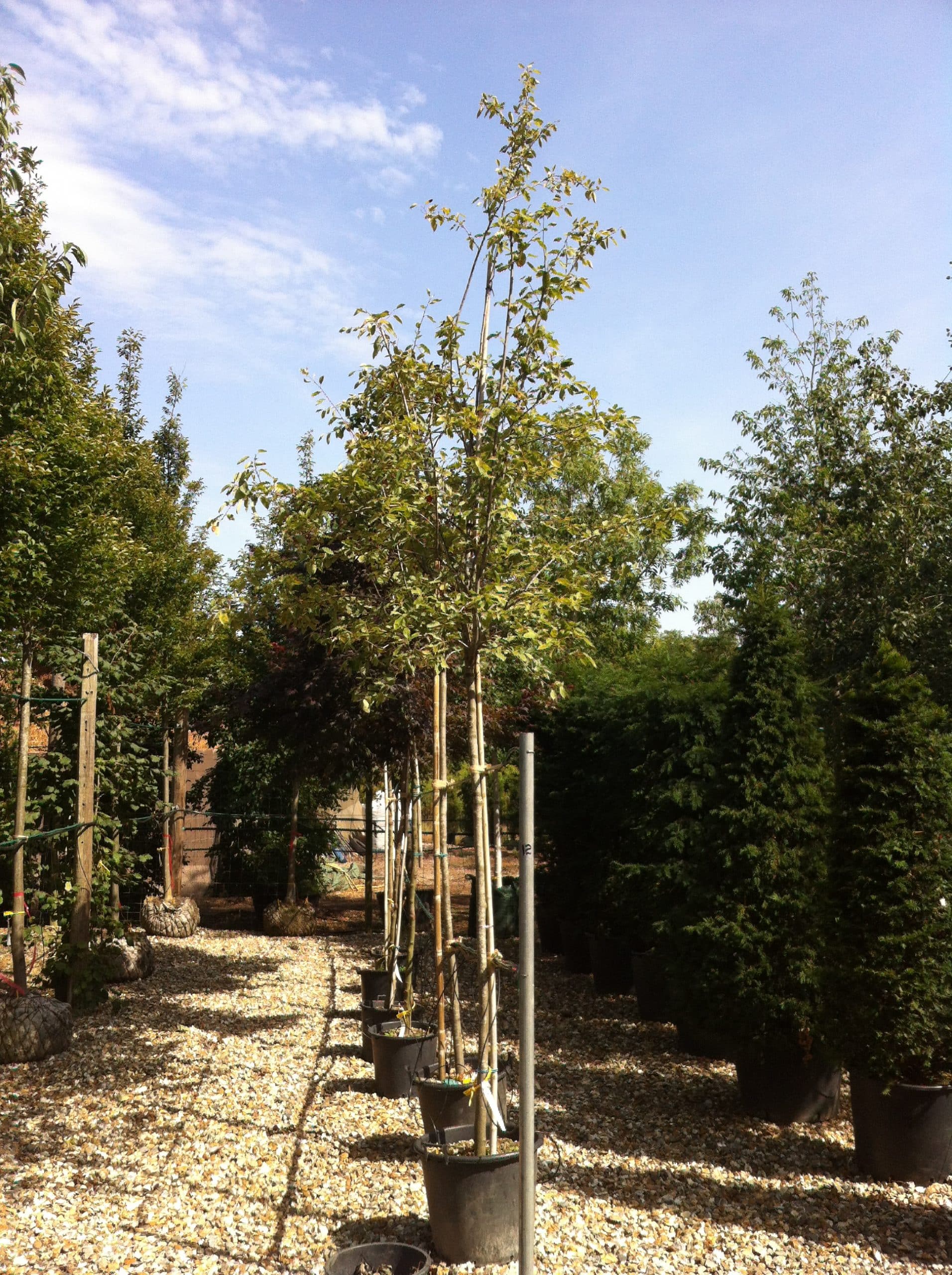
We have a wide variety of semi-mature trees in a range of sizes:

  • Girth measurement of 18cm to 100cm i.e. measurement around the tree stem at 1m high, for clear stemmed trees
  • Heights of 2-12m for feathered trees


Our recommendation for the best deciduous trees to plant in your garden

Betula utilis ‘Jacquemontii’

Betula utilis Jacquemontii’ is a West Himalayan Birch, also known as Himalayan Birch or Kashmir Birch that is known for its bright white bark that peels each year.  There are yellowy brown catkins in early spring up to 12cm in length and the delicate, dark green foliage turns golden yellow in autumn. A versatile tree which is tolerant of most soil types and can be planted effectively as a single focal specimen or in groups to exaggerate the effect of the gleaming white bark.

Ideal Conditions: Grows well in most soils, prefers a sunny location
Maximum Height: 18 metres


Betula pendula

The elegant Silver Birch Pendula produces light green foliage that shoots early and becomes orange-yellow in the autumn. In spring, it yields yellow catkins, around 5 cm in length. Its main branches are long and often grow horizontally, creating a semi weeping habit. This is a hardy tree which is frost resistant and regularly the first to grow back on bare or damaged land.

Ideal Conditions: Not suitable for conditions with compact soil, prefers to be in sun
Maximum Height: 20 metres


Prunus ‘Kanzan’

The Kanzan cherry tree is native to Japan, China and Korea. This beautiful flowering cherry produces an abundance of dark pink, densely filled blossom, which flower from deep red buds in May, making it a very popular variety. The large leaves appear red at first, and slightly darken before becoming a radiant green by summer. In autumn the foliage turns a coppery-yellow before falling. The RHS has given this tree an Award of Merit.

Ideal Conditions: Grows well in almost all well-drained soils
Maximum Height: 10 metres


Malus ‘Evereste’

Malus Evereste is a conical apple tree with delightful spring blossom. The flowers are red in bud but open white. In autumn it bears masses of red-flushed, orange-yellow fruits, which hang on through the winter. This variety is one of the most disease resistant crab apples, and will also tolerate pollution.

Ideal Conditions: Grows well in almost all well-drained soils. Full sun is preferred, although partial shade is tolerated
Maximum Height: 5-10 metres


Carpinus betulus

Carpinus betulus (Common Hornbeam) is a native tree. It’s bright green leaves turn bright yellow through to brown in the Autumn. Hornbeam often retains these brown leaves through the Winter and into the Spring.  Left to its nature state in a parkland setting, Hornbeam grows to be a large tree and looks good in groups.  However, it can be pruned and clipped into shape. It is a tough tree and regenerates well.

Ideal Conditions:  Tolerates a wide range of conditions.

Maximum Height: 12m+


Amelanchier lamarkii

Amelanchier lamarckii  is an attractive tree for all seasons. In spring, its at its most beautiful whilst in bloom, with vast amounts of white, star-shaped flowers. From July to September, it yields small, rounded fruits, which are a deep red in colour and sweet in flavour. Its leaves emerge as a russet shade, changing to green by spring and then to an orange/scarlet as autumn advances. It is a hardy plant that is frost resistant and has been given the Award of Garden Merit (AGM) by the Royal Horticultural Society.

Ideal Conditions: Moist-to-dry, well-drained, lime free soils
Maximum Height: 5-7 metres


Tips on planting deciduous trees

  • Autumn, winter and early spring are the best times to plant trees, so they can settle in and make root growth without the stress of supporting leafy growth
  • During the dormant season, the range of trees available is wider as they can be bought bare-rooted – dug up straight from nursery fields – with the bonus of avoiding plastic pots
  • Container grown trees can be bought and planted in spring and summer but must be kept watered during their first growing season
  • Always plant a tree at the same depth as it was growing previously. Put a piece of wood across the hole to get the level right
  • Stake and tie the tree for the first couple of years until well rooted

If you need assistance we can also plant the trees we supply.


More Information

If you would like to know what tree might be suitable for your garden, contact our Horticultural team who will be able to advise you.
 

Evergreen Trees

Recommended Evergreen Trees

What are evergreen trees?

Evergreen trees and shrubs keep their foliage all year round, in contrast to deciduous trees, which usually lose their leaves in autumn.

That makes evergreen trees particularly useful in gardens with the foliage and shape having a consistent look all year round. As well as ornamental appeal, this consistency makes evergreens particularly good as screening trees to create privacy in the garden. In addition, the evergreen foliage offers valuable shelter for birds and other wildlife in winter. Evergreen trees come in a range of sizes, and several are excellent trees for small gardens.


Tree sizes

We have a wide variety of semi-mature trees in a range of sizes:

  • Girth measurement of 18cm to 100cm i.e. measurement around the tree stem at 1m high, for clear stemmed trees
  • Heights of 2-12m for feathered evergreen trees


Top 5 best evergreen trees to plant in your garden


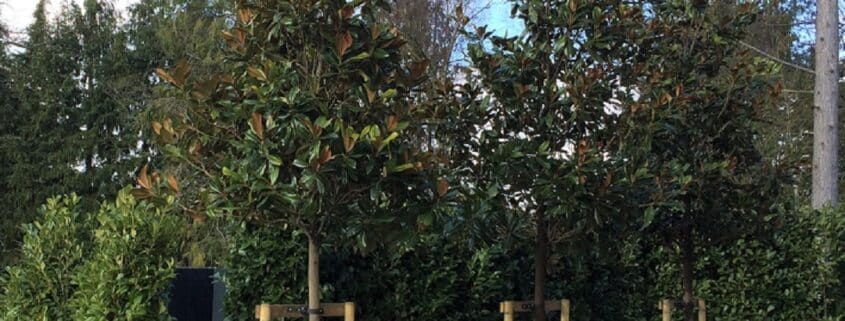
Magnolia grandiflora Gallisoniensis

Magnolia grandiflora Gallisoniensis or Bull Bay Magnolia produces beautiful, large, sweet citrus smelling white flowers in the summer, which can be up to 25 cm in diameter. At maturity this tree becomes broad with round headed, bushy habit which makes it brilliant for screening as well as an attractive feature.

Ideal Conditions: Grows well in most soils, must be sheltered and not north-facing.

Maximum Height: 15 metres


Ilex aquifolium Nellie R Stevens

Ilex aquifolium Nellie R Stevens (Holly Nellie R Stevens) has lustrous green glossy leaves are more smooth than spikey. Its  orange / red berries, which brighten up the garden as well as providing food and nesting for birds. It is ideal for screening due to its symmetrical habit, density and lack of pruning requirements.

Ideal Conditions: Grows well in well-drained soil, is drought tolerant, needs sun-partial sun

Maximum Height: 2-3 metres


Photinia Red Robin

Photinia fraseri Red Robin is a versatile evergreen suited to the UK environment; it makes a fine tree with a rounded growth habit which responds well to pruning.  The Red Robin’s stand out feature is the vibrant red new shoots in spring, which contrast with the white blossom – unusual in an evergreen.  The bright new leaves change to a deep, glossy green as they mature and are complemented with small round red berries in the summer. The RHS has given this tree an Award of Merit.

We sell the Photinia fraseri as a full feathered tree, as a standard clear-stem tree, in pleached form and as an instant hedge.

Ideal Conditions: Chalk-free, moist but well-drained soil, sunny to semi-shaded location

Maximum Height: 6 metres


Prunus laurocerasus Novita

With its dense, dark leaves, Prunus laurocerasus Novita (cherry laurel) is commonly planted as a screening, but is equally attractive as feature specimen tree. It grows in an upright, broad habit. Fresh green leaves emerge and get darker and glossier with age. In spring, mature trees produce a display of white blossom, which grow on upright racemes. The Leaves and fruit can be harmful if ingested, so be cautious when planting near livestock or children.

Ideal Conditions: Grows well in most soil

Maximum Height: 5 metres


Ligustrum japonicum

This Japanese privet is a compact, small sized evergreen tree with shining olive-green foliage.  Large clusters of white flower appear in late summer and are an attractive addition to this useful tree.

Ligustrum japonicum is an ideal tree for garden screening and is a tough performing species that will thrive on most soils, although it is best to avoid very water logged areas.

Ideal Conditions: Grows well in most soil

Maximum Height: 2-3 metres


Planting tips

Autumn is a great time to plant trees, giving them ample time to establish a good root system for strong branches and lush foliage in the following growing season.

To encourage roots to grow out in search of water and nutrients, prepare the soil thoroughly over a much larger area than just the planting hole – break up compaction at the base of the planting hole to allow deep rooting.

If you need assistance we can also plant the trees we supply.


More Information

If you would like to know what tree might be suitable for your garden, contact our Horticultural team who will be able to advise you.


Large trees newly planted in a garden
After The Storm Trees

After the Storm!

If your garden is looking a little worse for wear after the recent storms, we may be able to help!

We have a range of mature specimen trees that may be a perfect replacement for any of yours that have been damaged or blown over. Also, if your fence panels have taken a battering, you could consider replacing them with our Practical Instant Hedge™.


Semi-Mature Trees

We have a range of trees available at our nursery in Iver, both evergreen and deciduous. We also source top quality trees from across Europe, so our customers have the best trees available.

Our trees are supplied in a range of sizes:

  • Girth measurement of 18cm to 100cm i.e. measurement around the tree stem at 1m high, for clear stemmed trees
  • Heights of 2-12m for feathered evergreen trees

Instant Hedges

We have over 20 years’ experience in developing, maintaining, and planting instant hedging, including own Practical Instant Hedge™ which is grown in 1m long pieces here at our nursery in Iver, Buckinghamshire. This hedging provides immediate impact and maturity to many private gardens and landscaping projects.

Our Instant Hedges are:

  • pre grown and sold by the linear metre, rather than as individual plants
  • available to plant all year round
  • supplied between 0.8m to 2m high

The Complete Service

We offer a truly comprehensive service, from planning, preparation, and planting to aftercare.

Contact our horticultural team for more details hedge@pracbrown.co.uk

Japanese Maple
The Best Autumn Trees With Beautiful Colours [12 trees we recommend]

The Best Trees for Beautiful Autumn Colours

The Best Autumn Trees are great for gardens, creating structure and seasonal interest, with the following trees offering beautiful autumnal colour.  Position such trees well and they will make an ideal focal point, that they can be enjoyed now and for future generations.

We have a range of quality trees for suitable as specimens, screening or for small gardens; just ask our horticultural experts.

Here is a selection of our top trees for colourful displays in your autumn garden. When choosing a tree, consider the space you have available, planting a selection of trees, if space allows, can provide rich contrast and seasonal interest.

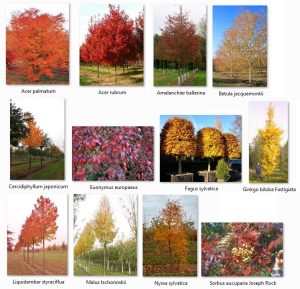
Trees offering great autumn colours

  1. Acer palmatum (Japanese Maple)Best Autumn Trees
  2. Acer rubrum (Red Maple)
  3. Amelanchier Ballerina (Serviceberry Ballerina)
  4. Betula utilis jacquemontii (West Himalayan Birch)
  5. Cercidiphyllum japonicum (Katsura Tree)
  6. Euonymus europaeus (Spindle)
  7. Fagus sylvatica (Common beech)
  8. Ginkgo biloba (Maidenhair tree)
  9. Liquidambar styraciflua (Sweet Gum)
  10. Malus tschonoskii (Chonosuki crab)
  11. Nyssa sylvatica (Tupelo/Black Gum)
  12. Sorbus aucuparia Joseph Rock (Rowan Joseph Rock)


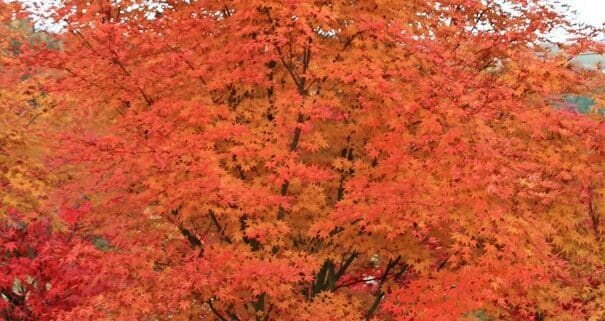
Acer palmatum (Japanese Maple)

Japanese Maples are prized for their gorgeous foliage, deeply lobed leaves, which emerge a vivid green and turn to shades of red, orange and yellow in autumn. Acer palmatum is an excellent choice for smaller gardens, as it grows to around 5m.


Acer rubrum (Red Maple)

These Red Maple trees are renowned for their spectacular scarlet autumn hues which emerge a pale yellow in spring gradually darkening to dark green in summer, turning bright red in autumn. The winter twigs have a red hue, as do its tiny spring flowers, providing additional interest.


Amelanchier Ballerina (Serviceberry Ballerina)

This tough, hardy small tree has masses of spring flowers. The bright green leaves turn brilliant red in the autumn, emerging in conjunction with rounded fruits which are initially red in summer before turning black in the autumn. Also known as June Berry or Serviceberry Ballerina


Betula utilis jacquemontii (West Himalayan Birch)

The bright white bark of this elegant himalayan birch tree peels each year, revealing the next layer of perfectly accentuated by lenticels lines. Its delicate, dark green foliage turn golden yellow in autumn.


Cercidiphyllum japonicum (Katsura Tree)

This tree has pretty foliage that emerges bronze in spring before turning light green in the Summer. Autumn brings brilliant displays of orange yellow and red, accompanied by the smell of burnt sugar and candy floss which drifts gently in the breeze.


Euonymus europaeus (Spindle)

A small spreading tree, the Spindle has small yellow flowers, followed in autumn by 4-lobed red fruits which split to reveal orange seeds. The narrow leaves are dark green in summer turning yellow-green to reddish-purple in autumn.


Fagus sylvatica (Beech)

Beech tree’s small leaves are a fresh green when they emerge and become a stunning orange-copper and gold in autumn, which often hang on the tree throughout winter.


Ginkgo biloba (Maidenhair tree ‘Autumn Gold’)

The Maidenhair Tree has bright green fan-shaped leaves. In autumn time, these wonderfully shaped leaves turn a clear and bright yellow and work well planted in contrast with other species that will give red autumn colour.


Liquidambar styraciflua (Sweet Gum)

Liquidambar produces large, 5-7 lobed, star-shaped leaves which emerge bright green in the spring then changing to fabulous red, purple and gold colours throughout the autumn; Liquidambar is one of the very best trees for autumn colour and one of the last deciduous trees to drop its leaves.


Malus tschonoskii (Chonosuki crab)

In the spring the young leaves of this tree emerge almost white. They have many spectacular shades in Autumn, from purple and copper through orange to yellow. The winter buds are a remarkable brownish-red colour and glossy.


Nyssa sylvatica (Tupelo)

The Tupelo or black gum is a wonderful tree for autumn foliage with its green summer leaves turning fiery red/ and orange in autumn.


Sorbus aucuparia Joseph Rock (Rowan Joseph Rock)

This Mountain Ash has small, narrow dark green leaves that turn a flame red in the autumn time.  The creamy white flowers hang in clusters, appearing around May-June.  These are followed by interestingly creamy yellow berries, whose colour contrasts fantastically with the bright red autumn colour.


Foxglove tree heat tolerant
Top 10 Trees for Hot Dry UK Summers

Drought Tolerant Trees

Trees are a great addition to almost any garden, creating structure and seasonal interest.  Gardens provide a sanctuary and respite from the busy world and planting trees are adapted to hotter, drier climates could be useful to these changing climatic conditions.

Here we list our top 10 trees that are suitable for hot dry or heat wave summers.

We have a range of quality trees for suitable as specimens, screening or for small gardens; just ask our horticultural experts.

Top 10 Trees for hot dry summers

  1. Betula pendula (Silver Birch)
  2. Catalpa bignonioides (Indian Bean Tree)
  3. Cercis siliquastrum (Judas tree)
  4. Corylus colurna (Turkish Hazel)
  5. Crataegus crusgalli (Cockspur thorn)
  6. Ginkgo biloba (Maidenhair Tree)
  7. Gleditsia triacanthos (Honey Locust Sunburst)
  8. Koelreuteria paniculata (Golden Rain Tree)
  9. Paulownia tomentosa (Foxglove Tree)
  10. Pyrus calleryana Chanticleer (Callery Pear)


Choosing the right species is key to a thriving landscape during a heatwave. While drought tolerance is essential, maximizing physical relief from the heat is just as important. To help you design a cooler outdoor space, we have also compiled a dedicated guide highlighting the best shade trees to plant in your garden.


Our Best Trees for Hot UK Summers

  1. Betula pendula

This tree, more commonly known as a Silver Birch, has an elegant appearance. As a young tree it has a distinctive white bark with darker lines and shapes decorating the trunk. Its main branches are long and often grow horizontally, creating a semi weeping habit.  The Pendula produces yellow catkins in the spring and light green foliage that shoots early and becomes orange-yellow in the autumn. This is a hardy tree which is frost resistant and regularly the first to grow back on bare or damaged land.

  1. Catalpa bignonioides

The Indian Bean tree originates from America. It is a magnificent medium to large tree which comes into leaf late and produces exotic orchid-like flowers in mid-summer followed by beans in the autumn. The leaves turn a pale yellow in the autumn. A good specimen tree.

  1. Cercis siliquastrum

Cercis siliquastrum is a bushy, deciduous small tree which produces its bloom straight from the trunk and stems. The rosy-lilac, pea-like flowers cover the wood in May, producing a stunning floral display that is quite uncharacteristic of a tree. Following the flowers, the bright green, almost heart shaped leaves are developed on the Judas tree, later accompanied by dark purple tinted seed pods in July.

  1. Corylus colurna

Also known as the Turkish Hazel, Corylus colurna is a stately and imposing tree at maturity. Its leaves are bright green and are broadly heart shaped. During the early spring long, yellow catkins are produced, followed by clusters of nuts that are contained in frilly looking husks in autumn.  It has a rough, corky bark that becomes more distinguished as it matures.

  1. Crataegus crusgalli

Crataegus crusgalli (or Cockspur thorn) is a small tree with horizontal, spreading branches and a flat-topped shape at maturity. It has showy white flowers, brick-red fruits, glossy summer and vibrant, multi-coloured autumn foliage, and bold winter texture.

  1. Ginkgo biloba

The Ginkgo biloba or Maidenhair Tree has bright green fan-shaped leaves, with two leaf blades. In autumn time, these wonderfully shaped leaves turn a clear and bright yellow. Ginkgo biloba forms a large specimen with a conical shape at maturity. It is extremely hardy and is a great choice for parks and avenues. Mature female plants produce fruits which bear a distinctive smell.

  1. Gleditsia triacanthos Sunburst

The Gleditsia triacanthos or Honey Locust Sunburst is a pretty and delicate looking tree which has a rounded and spreading form. The frond-like foliage is often late to appear, emerging a brilliant lime yellow colour and ageing to light green as the summer progresses. Unlike its parent, this cultivar is thornless.

  1. Koelreuteria paniculata

Koelreuteria paniculata is known as Pride of India, or the Golden Rain Tree. Its profuse small yellow flowers develop in late spring and these form lantern-shaped fruits that turn red in the autumn when its green leaves turn a rich yellow. Grow as a specimen tree in well-drained or moist but well-drained soil in full sun Golden Rain Tree thrives best on free draining soils with a sunny aspect.

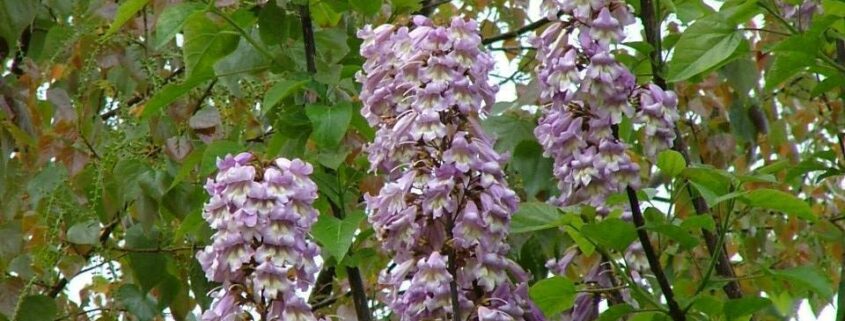
  1. Paulownia tomentosa

The Paulownia tomentosa  or Foxglove tree, is a pretty and an unusual tree; it has extremely large, bright green, hairy leaves which can reach up to 30cm across and appear to come directly from the bare wood of the tree. In May this tree will produce large spikes of rich purple flowers, very similar to the foxglove. It is fast growing and sprawling, the wood is very light making it easy to prune. Paulownia tomentosa does best in sunny, reasonably sheltered sites.

  1. Pyrus calleryana Chanticleer

The Pyrus calleryana Chanticleer or Callery Pear is a medium tree, with side branches stretching upwards creating a narrow, conical shape. It has ovoid leaves, which emerge as early as March and are a glossy, lush green which last through to November, when they change to a reddish-purple before falling. It produces a small, pear-shaped fruit around 1 cm thick.
Pyrus calleryana Chanticleer is a very hardy tree and is resistant to frost, heat, wind and pollution.

Trees specimen and semi mature
Top Quality Containerised Trees

Top Quality Containerised Trees

Available for Planting Now


Comprehensive Range

Practicality Brown’s tree nursery specialises in large trees, both evergreen and deciduous. With a combination of home grown and outsourced specimen and semi mature trees, we offer a broad range which includes many native UK species; trees that are suitable all occasions.

Containerised Trees

We have an excellent selection of beautiful trees that are available in containers and are ready to plant now, ahead of the traditional root ball season. These trees are in girth sizes 20cm to 65cm, up to 8m high.

All our acclimatised containerised stock has been carefully tended to at our nursery to ensure it is ready for delivery in perfect condition. We continually monitor conditions to ensure that trees are in the peak condition for planting, paying close attention to bio security and plant health management.

From delicate Acers (Maples), fully feathered Magnolia grandiflora to pleached Quercus palustris (Pin Oaks) and classic English Yew, there is something on the list for everyone.

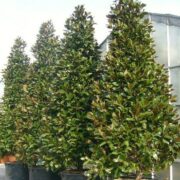
Magnolia grandiflora fully feathered

Magnolia grandiflora

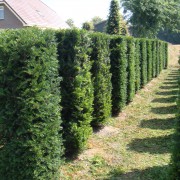
Image of a Yew Taxus baccata 1.5m element

Yew Taxus baccata 1.5m elements

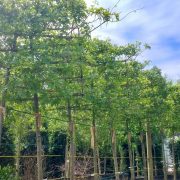
Quercus palustris Specimen tree

Pleached Pin Oak

The trees detailed on this list are those we currently have in stock at our nursery; the heights and girths reflect actual sizes of these individual trees. The availability can daily, so please call to confirm availability of particular stock.  All prices shown are ex vat and exclude delivery, please use our enquiry form to request a detailed quotation.

We would be delighted to see you at our nursery in Iver, Buckinghamshire; please make an appointment to ensure one of our team are available to show you around.  We are located near to M4, M25 and M40 junctions, about 6 miles from Heathrow Airport and 15 miles from London and just 1 mile from Iver Station, with trains from London Paddington.

We look forward to welcoming you onto our nursery soon.

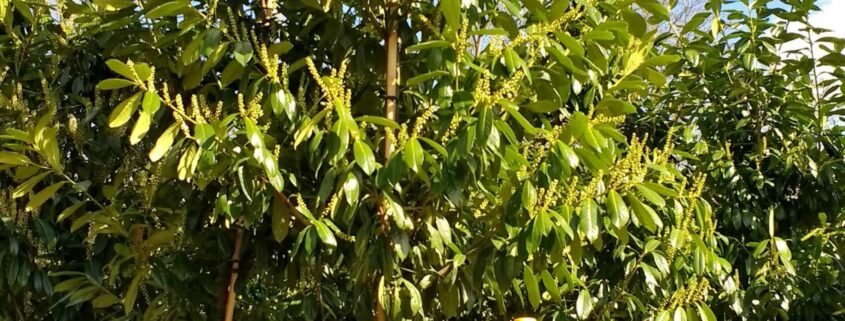
Cherry laurel is a great screening tree
Creating Privacy with Screening Trees

Screening Trees

Prunus laurocerasus Novita`

Privacy in your garden can be created using trees to hide or screen out an undesirable view; they can also be used to draw the eye to a specific feature.

Trees grown for this purpose often have a clear stem i.e. no leaves on the lower trunk; they reach up to fence panel height of around 1.8-2m with a full bushy canopy above, forming a good screen above the fence line. This type of screening is particularly useful if you are overlooked by neighbouring properties or would like to retain lower level exposure to an attractive wall or area.  Screening trees can be designed to create a focus point, perhaps to make the most of a feature.


Type of Privacy

It is a good idea to consider what you are aiming to screen out. For example are you directly overlooked by a neighbouring property, or would you like to filter out a large building or structure? Also consider the angle you are viewing from, as this may help choosing the right tree for your needs.

Practicality Brown’s semi-mature trees can be planted to achieve effective screening from the offset with evergreens being preferred for this purpose as they screen throughout the year.  However, a planting scheme that includes deciduous trees can provide rich contrast and seasonal interest.


Cherry Laurel

Prunus laurocerasus Novita close up

Prunus laurocerasus Novita, a dense evergreen tree, is popularly used for screening due to its upright and bushy habit and its

resilience to cold weather. In April small, fragrant, white flowers grow in vertical racemes about 12cm long which are followed by small glossy, black fruit.

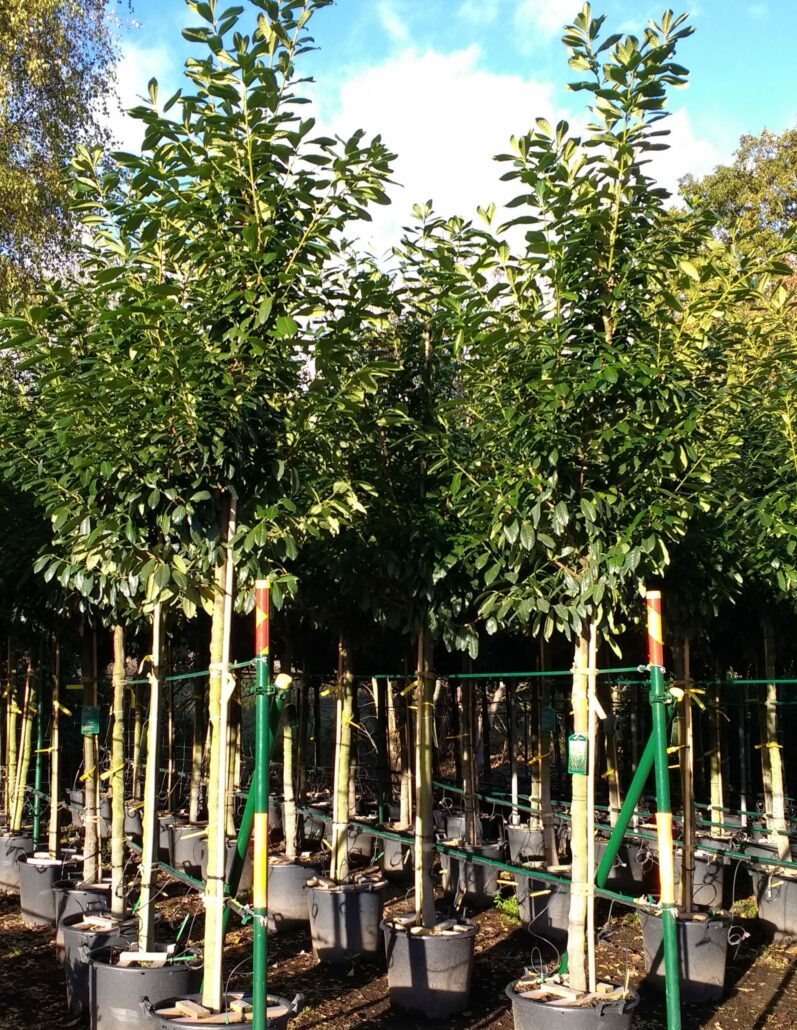
We have semi-mature containerised Prunus laurocerasus Novita with a 1.8m clear-stem, available now.

The Cherry Laurel grows well in most soil and conditions, preferring moist slightly acidic soil.  Pruning in late spring to helps to retain its shape and encourages new growth.  If planting in a row, the optimum distance for the clear stem is with 1.2-1.5m spacing.

Trees from Practicality Brown

We can supply a range of top quality trees for decorative or screening, which are particularly useful to create privacy in your garden.   These include feathered trees that have full growth from the ground upwards and offer the same screening ability.  A mix planting of evergreen and deciduous trees, if space allows, can be an attractive solution.

We also have a range of pleached trees which can be used in the same way; pleached trees can be effective for a formal screen and where space is limited.

Root-balled Trees and Transplanting

Bare root trees

Autumn heralds wonderful colours and falling leaves but for growers the cooler soils signify the ideal time to start transplanting trees and shrubs. Specimen trees, typically too large for containers, are systematically transplanted by skilled growers and root-balled with a compact root system, which enables trees to be re-located without stress or shock. This process continues into the winter when the trees are fully dormant making it perfect to transplant them.

Practicality Brown’s preferred growers throughout UK and Europe are now preparing and shipping  those trees selected and reserved during the summer, either to our nursery in Iver or direct to site to satisfy clients requirements.

These trees have their root system carefully enclosed and held in place with wire-wrapped hessian, which ensures the soil remains in contact with the roots throughout lifting, transportation and planting operations. Our root-ball trees have been prepared by being ‘undercut’ i.e. root pruned or transplanted several times (every 3 years for Deciduous and 4 years for Evergreen) to encourage the development of a fibrous root system.

The root ball season is now open; please call us to discuss your requirements. We can advise on preparation, planting and aftercare too.